


- Afhalen na 1 uur in een winkel met voorraad
- Gratis thuislevering in België vanaf € 30
- Ruim aanbod met 7 miljoen producten
- Afhalen na 1 uur in een winkel met voorraad
- Gratis thuislevering in België vanaf € 30
- Ruim aanbod met 7 miljoen producten





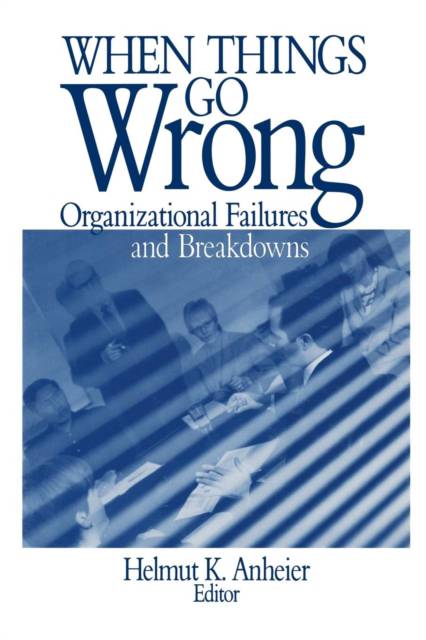
When Things Go Wrong
Organizational Failures and Breakdowns
Paperback | Engels
€ 192,45
+ 384 punten
Omschrijving
To understand success, you must first understand failure. This understanding is especially critical since failure is a phenomenon that is much more common to everyday life, businesses, and government practice than standard theory would lead us to assume. Failure manifests itself in many ways, including breakdowns, bankruptcies, and other forms of organizational catastrophes and fiascoes. Thus, learning from failure will enable success. When Things Go Wrong brings together contributions from 24 leading scholars who examine the causes, patterns, process, and outcomes of such failures from economic, managerial, cognitive and political perspectives. This book presents failure as a relative concept in terms of the expectations and strategies of stakeholders putting a claim on the performance of the organization and the notion of success. It challenges future research in this field to combine both economic and non-economic performance measures to assess organizational tendencies toward success and failure and to differentiate between failure as process and failure as an outcome.
Specificaties
Betrokkenen
- Uitgeverij:
Inhoud
- Aantal bladzijden:
- 328
- Taal:
- Engels
Eigenschappen
- Productcode (EAN):
- 9780761910480
- Verschijningsdatum:
- 1/01/1999
- Uitvoering:
- Paperback
- Formaat:
- Trade paperback (VS)
- Afmetingen:
- 166 mm x 232 mm
- Gewicht:
- 512 g

Alleen bij Standaard Boekhandel
+ 384 punten op je klantenkaart van Standaard Boekhandel
Cadeau

AANGERADEN


Beoordelingen
We publiceren alleen reviews die voldoen aan de voorwaarden voor reviews. Bekijk onze voorwaarden voor reviews.