



Je cadeautjes zeker op tijd in huis hebben voor de feestdagen? Kom langs in onze winkels en vind het perfecte geschenk!
- Afhalen na 1 uur in een winkel met voorraad
- Gratis thuislevering in België vanaf € 30
- Ruim aanbod met 7 miljoen producten
Je cadeautjes zeker op tijd in huis hebben voor de feestdagen? Kom langs in onze winkels en vind het perfecte geschenk!
- Afhalen na 1 uur in een winkel met voorraad
- Gratis thuislevering in België vanaf € 30
- Ruim aanbod met 7 miljoen producten





Omschrijving
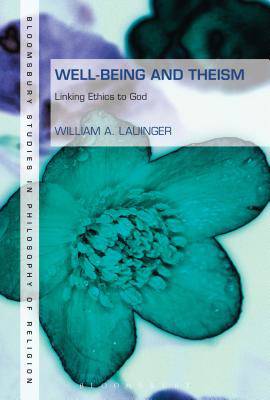
Well-Being and Theism is divided into two distinctive parts. The first part argues that desire-fulfillment welfare theories fail to capture the 'good' part of 'good for', and that objective list welfare theories fail to capture the 'for' part of 'good for'. Then, with the aim of capturing both of these parts of 'good for', a hybrid theory-one which places both a value constraint and a desire constraint on well-being-is advanced. Lauinger then defends this proposition, which he calls the desire-perfectionism theory, against possible objections.
In the second part, Lauinger explores the question of what metaphysics best supports the account of well-being defended in the first part. It is argued that there are two general metaphysical routes that might convincingly be taken here, and that each one leads us toward theism.
In the second part, Lauinger explores the question of what metaphysics best supports the account of well-being defended in the first part. It is argued that there are two general metaphysical routes that might convincingly be taken here, and that each one leads us toward theism.
Specificaties
Betrokkenen
- Auteur(s):
- Uitgeverij:
Inhoud
- Aantal bladzijden:
- 208
- Taal:
- Engels
- Reeks:
Eigenschappen
- Productcode (EAN):
- 9781628926880
- Verschijningsdatum:
- 30/01/2014
- Uitvoering:
- Paperback
- Formaat:
- Trade paperback (VS)
- Afmetingen:
- 152 mm x 229 mm
- Gewicht:
- 281 g


Alleen bij Standaard Boekhandel
+ 176 punten op je klantenkaart van Standaard Boekhandel
CADEAU


Beoordelingen
We publiceren alleen reviews die voldoen aan de voorwaarden voor reviews. Bekijk onze voorwaarden voor reviews.