



- Afhalen na 1 uur in een winkel met voorraad
- In januari gratis thuislevering in België
- Ruim aanbod met 7 miljoen producten
- Afhalen na 1 uur in een winkel met voorraad
- In januari gratis thuislevering in België
- Ruim aanbod met 7 miljoen producten





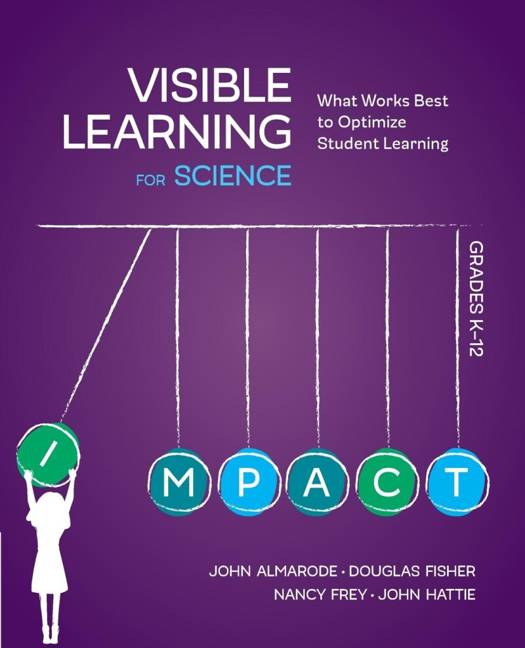
Visible Learning for Science, Grades K-12
What Works Best to Optimize Student Learning
John T Almarode, Douglas Fisher, Nancy Frey, John Hattie
Paperback | Engels
€ 61,95
+ 123 punten
Omschrijving
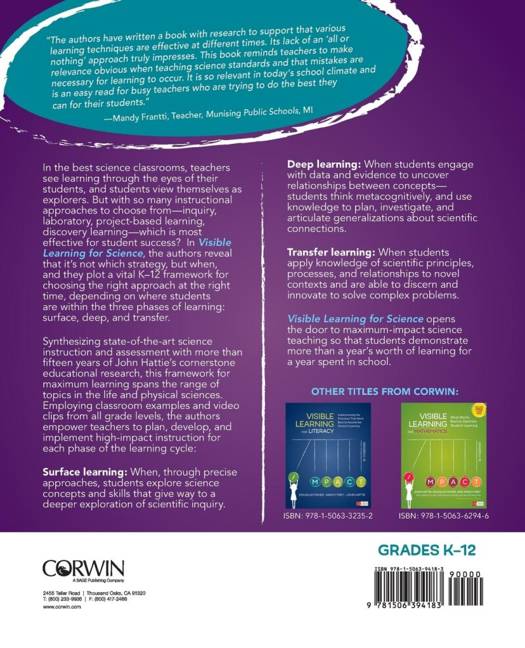
In the best science classrooms, teachers see learning through the eyes of their students, and students view themselves as explorers. But with so many instructional approaches to choose from--inquiry, laboratory, project-based learning, discovery learning--which is most effective for student success?
In Visible Learning for Science, the authors reveal that it's not which strategy, but when, and plot a vital K-12 framework for choosing the right approach at the right time, depending on where students are within the three phases of learning: surface, deep, and transfer.
Synthesizing state-of-the-art science instruction and assessment with over fifteen years of John Hattie's cornerstone educational research, this framework for maximum learning spans the range of topics in the life and physical sciences. Employing classroom examples from all grade levels, the authors empower teachers to plan, develop, and implement high-impact instruction for each phase of the learning cycle:
Surface learning: when, through precise approaches, students explore science concepts and skills that give way to a deeper exploration of scientific inquiry.
Deep learning: when students engage with data and evidence to uncover relationships between concepts--students think metacognitively, and use knowledge to plan, investigate, and articulate generalizations about scientific connections.
Transfer learning: when students apply knowledge of scientific principles, processes, and relationships to novel contexts, and are able to discern and innovate to solve complex problems.
Visible Learning for Science opens the door to maximum-impact science teaching, so that students demonstrate more than a year's worth of learning for a year spent in school.
In Visible Learning for Science, the authors reveal that it's not which strategy, but when, and plot a vital K-12 framework for choosing the right approach at the right time, depending on where students are within the three phases of learning: surface, deep, and transfer.
Synthesizing state-of-the-art science instruction and assessment with over fifteen years of John Hattie's cornerstone educational research, this framework for maximum learning spans the range of topics in the life and physical sciences. Employing classroom examples from all grade levels, the authors empower teachers to plan, develop, and implement high-impact instruction for each phase of the learning cycle:
Surface learning: when, through precise approaches, students explore science concepts and skills that give way to a deeper exploration of scientific inquiry.
Deep learning: when students engage with data and evidence to uncover relationships between concepts--students think metacognitively, and use knowledge to plan, investigate, and articulate generalizations about scientific connections.
Transfer learning: when students apply knowledge of scientific principles, processes, and relationships to novel contexts, and are able to discern and innovate to solve complex problems.
Visible Learning for Science opens the door to maximum-impact science teaching, so that students demonstrate more than a year's worth of learning for a year spent in school.
Specificaties
Betrokkenen
- Auteur(s):
- Uitgeverij:
Inhoud
- Aantal bladzijden:
- 216
- Taal:
- Engels
Eigenschappen
- Productcode (EAN):
- 9781506394183
- Verschijningsdatum:
- 23/03/2018
- Uitvoering:
- Paperback
- Formaat:
- Trade paperback (VS)
- Afmetingen:
- 185 mm x 229 mm
- Gewicht:
- 430 g


Alleen bij Standaard Boekhandel
+ 123 punten op je klantenkaart van Standaard Boekhandel
Cadeau

AANGERADEN


Beoordelingen
We publiceren alleen reviews die voldoen aan de voorwaarden voor reviews. Bekijk onze voorwaarden voor reviews.