



Bedankt voor het vertrouwen het afgelopen jaar! Om jou te bedanken bieden we GRATIS verzending (in België) aan op alles gedurende de hele maand januari.
- Afhalen na 1 uur in een winkel met voorraad
- Gratis thuislevering in België vanaf € 30
- Ruim aanbod met 7 miljoen producten
Bedankt voor het vertrouwen het afgelopen jaar! Om jou te bedanken bieden we GRATIS verzending (in België) aan op alles gedurende de hele maand januari.
- Afhalen na 1 uur in een winkel met voorraad
- Gratis thuislevering in België vanaf € 30
- Ruim aanbod met 7 miljoen producten





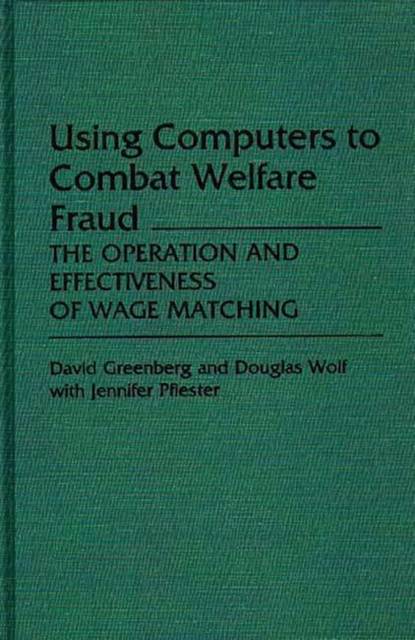
Using Computers to Combat Welfare Fraud
The Operation and Effectiveness of Wage Matching
David H Greenberg, Douglas Wolf, Jennifer Pfiester
€ 161,45
+ 322 punten
Omschrijving
In this study, David Greenberg and Douglas Wolf describe, systematize, and evaluate the cost effectiveness of computerized anti-fraud procedures in public welfare programs. In particular, they discusss the Congressionally mandated wage matching systems used to check for under-reported or non-reported incomes of participants in the AFDC and Food Stamp Programs. The authors describe the implementation of such systems in several local areas around the country, point out factors that currently impede the use of wage matching, and suggest ways of reducing such impediments. They also enumerate the advantages and disadvantages of alternative wage matching procedures and techniques, both in theory and practice. Cost benefit analyses of four existing wage matching systems are then presented. Finally, the authors present their conclusions and make recommendations. This volume is complete with a flow chart showing the operation of a typical wage-matching system, and a table summarizing the costs and benefits to the government of running such systems.
Specificaties
Betrokkenen
- Auteur(s):
- Uitgeverij:
Inhoud
- Aantal bladzijden:
- 279
- Taal:
- Engels
- Reeks:
Eigenschappen
- Productcode (EAN):
- 9780313248702
- Verschijningsdatum:
- 21/10/1986
- Uitvoering:
- Hardcover
- Formaat:
- Genaaid
- Afmetingen:
- 156 mm x 234 mm
- Gewicht:
- 571 g


Alleen bij Standaard Boekhandel
+ 322 punten op je klantenkaart van Standaard Boekhandel
CADEAU


Beoordelingen
We publiceren alleen reviews die voldoen aan de voorwaarden voor reviews. Bekijk onze voorwaarden voor reviews.