



Bedankt voor het vertrouwen het afgelopen jaar! Om jou te bedanken bieden we GRATIS verzending (in België) aan op alles gedurende de hele maand januari.
- Afhalen na 1 uur in een winkel met voorraad
- Gratis thuislevering in België vanaf € 30
- Ruim aanbod met 7 miljoen producten
Bedankt voor het vertrouwen het afgelopen jaar! Om jou te bedanken bieden we GRATIS verzending (in België) aan op alles gedurende de hele maand januari.
- Afhalen na 1 uur in een winkel met voorraad
- Gratis thuislevering in België vanaf € 30
- Ruim aanbod met 7 miljoen producten





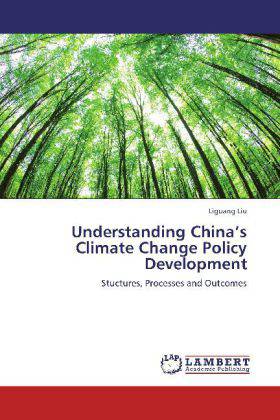
Understanding China's Climate Change Policy Development
Stuctures, Processes and Outcomes
Liguang Liu
Paperback | Engels
€ 77,95
+ 155 punten
Omschrijving
This research utilizes the policy network approach to explore China s climate change mitigation policy-making process. Three cases are selected to illuminate structural and interactive features of the specific policy network settings in shaping different policy arrangements and influencing the outcomes in the Chinese context. The historical analysis of the policy process uses both primary data from interviews and secondary data from relevant literature. The study finds that the Chinese central government dominates domestic climate change policy making. However, expanded action networks involving actors at all levels have emerged in correspondence to the needs of diverse policy arrangements. In conclusion, the research suggests that the policy network approach provides a useful tool for studying China s climate change policy-making process. The involvement of various state and societal actors has shaped new relations and affected the policy outcomes and changes. In addition, the study argues that the traditional fragmented authoritarianism model is not appropriate in explaining new development and changes of policy process in contemporary China.
Specificaties
Betrokkenen
- Auteur(s):
- Uitgeverij:
Inhoud
- Aantal bladzijden:
- 216
- Taal:
- Engels
Eigenschappen
- Productcode (EAN):
- 9783659334467
- Uitvoering:
- Paperback
- Afmetingen:
- 150 mm x 220 mm


Alleen bij Standaard Boekhandel
+ 155 punten op je klantenkaart van Standaard Boekhandel
CADEAU


Beoordelingen
We publiceren alleen reviews die voldoen aan de voorwaarden voor reviews. Bekijk onze voorwaarden voor reviews.