



Je cadeautjes zeker op tijd in huis hebben voor de feestdagen? Kom langs in onze winkels en vind het perfecte geschenk!
- Afhalen na 1 uur in een winkel met voorraad
- Gratis thuislevering in België vanaf € 30
- Ruim aanbod met 7 miljoen producten
Je cadeautjes zeker op tijd in huis hebben voor de feestdagen? Kom langs in onze winkels en vind het perfecte geschenk!
- Afhalen na 1 uur in een winkel met voorraad
- Gratis thuislevering in België vanaf € 30
- Ruim aanbod met 7 miljoen producten





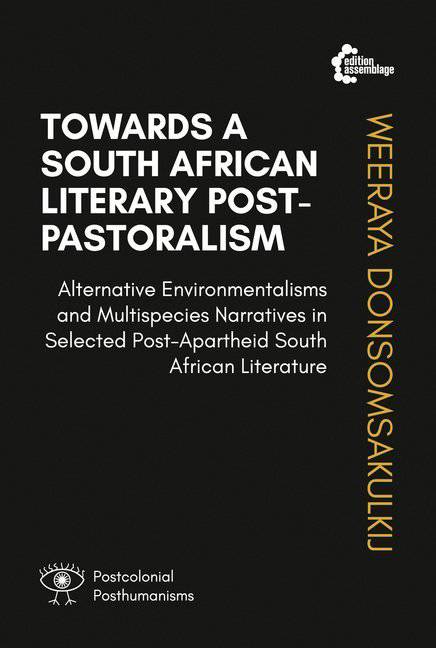
Towards A South African Literary Post-Pastoralism
Alternative Environmentalisms and Multispecies Narratives in Selected Post-Apartheid South African Literature
Weeraya Donsomsakulkij
€ 19,95
+ 39 punten
Omschrijving
This book demonstrates how "The House Gun and Get A Life" by Nadine Gordimer, "Disgrace" and "Elizabeth Costello" by J.M. Coetzee, and "The Heart of Redness" and "The Whale Caller" by Zakes Mda, inspire the environmental awareness and contribute to the field of the environmental justice by insisting on the power of nonhuman agents. The book employs insights of "postcolonial-material ecocriticism" to discover a way of reading fictional representations in which all entities reflect on the enmeshment that challenges the binary segregation. The South African fiction is scrutinized as alternative environmentalisms, mirroring a turn to rethink nonhuman positions as a way to subvert anthropocentrism.
Specificaties
Betrokkenen
- Auteur(s):
- Uitgeverij:
Inhoud
- Aantal bladzijden:
- 232
- Taal:
- Engels
- Reeks:
- Reeksnummer:
- nr. 1
Eigenschappen
- Productcode (EAN):
- 9783960420378
- Uitvoering:
- Paperback
- Afmetingen:
- 205 mm x 140 mm
- Gewicht:
- 275 g


Alleen bij Standaard Boekhandel
+ 39 punten op je klantenkaart van Standaard Boekhandel
CADEAU


Beoordelingen
We publiceren alleen reviews die voldoen aan de voorwaarden voor reviews. Bekijk onze voorwaarden voor reviews.