



Je cadeautjes zeker op tijd in huis hebben voor de feestdagen? Kom langs in onze winkels en vind het perfecte geschenk!
- Afhalen na 1 uur in een winkel met voorraad
- Gratis thuislevering in België vanaf € 30
- Ruim aanbod met 7 miljoen producten
Je cadeautjes zeker op tijd in huis hebben voor de feestdagen? Kom langs in onze winkels en vind het perfecte geschenk!
- Afhalen na 1 uur in een winkel met voorraad
- Gratis thuislevering in België vanaf € 30
- Ruim aanbod met 7 miljoen producten





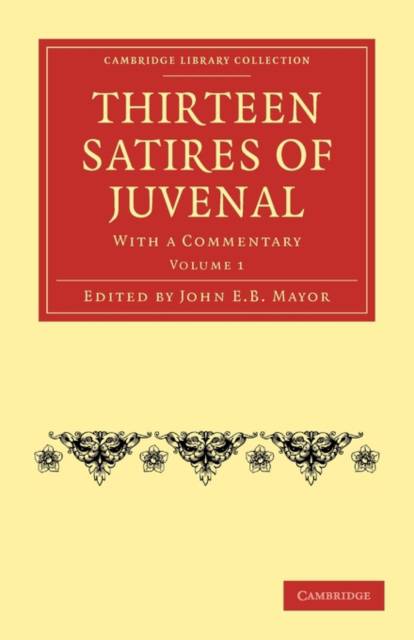
Omschrijving
The second edition of John Mayor's 1853 commentary on the Roman satirist Juvenal was published in the years 1872 to 1879, and according to the author's preface was intended as a precursor to an even larger-scale study. Thirteen of Juvenal's satires are featured here (Satires 2, 6 and 9 are omitted) and a thorough commentary is given for each, guiding the reader through the poet's intricate language and a dense web of historical and mythological allusions. Mayor (1825-1910), who was elected Professor of Latin at Cambridge in 1872 and became one of the original Fellows of the British Academy, applied his extensive knowledge of thought and life in Imperial Rome to make this difficult material more approachable. Volume 1 contains the text of the satires, and Mayor's notes on the first five pieces in his selection.
Specificaties
Betrokkenen
- Auteur(s):
- Uitgeverij:
Inhoud
- Aantal bladzijden:
- 348
- Taal:
- Engels
- Reeks:
Eigenschappen
- Productcode (EAN):
- 9781108011013
- Verschijningsdatum:
- 20/05/2010
- Uitvoering:
- Paperback
- Formaat:
- Trade paperback (VS)
- Afmetingen:
- 140 mm x 216 mm
- Gewicht:
- 439 g


Alleen bij Standaard Boekhandel
+ 167 punten op je klantenkaart van Standaard Boekhandel
CADEAU


Beoordelingen
We publiceren alleen reviews die voldoen aan de voorwaarden voor reviews. Bekijk onze voorwaarden voor reviews.