



Je cadeautjes zeker op tijd in huis hebben voor de feestdagen? Kom langs in onze winkels en vind het perfecte geschenk!
- Afhalen na 1 uur in een winkel met voorraad
- Gratis thuislevering in België vanaf € 30
- Ruim aanbod met 7 miljoen producten
Je cadeautjes zeker op tijd in huis hebben voor de feestdagen? Kom langs in onze winkels en vind het perfecte geschenk!
- Afhalen na 1 uur in een winkel met voorraad
- Gratis thuislevering in België vanaf € 30
- Ruim aanbod met 7 miljoen producten





€ 373,45
+ 746 punten
Omschrijving
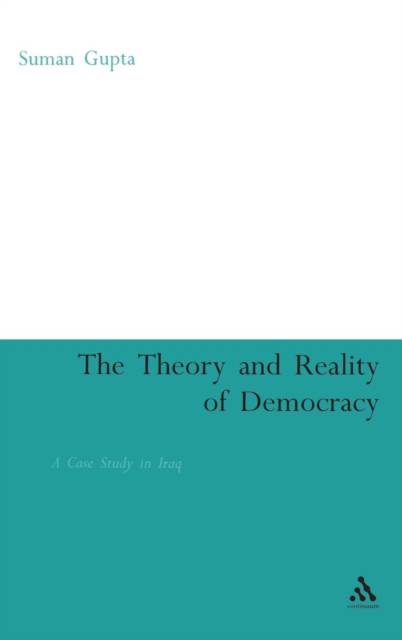
This is a study of conceptualizations and applications of the idea of democracy in international and transnational politics (outside the confines of constituted political states, or outside a broadly understood domestic political sphere), which uses a politically realist methodology. This study provides a critical survey of current conceptual positions assumed in this area, and tests these against specific real world events, using the invasion and occupation of Iraq by a US-UK led coalition as a case study. Several aspects of this context are examined here, with a view to discerning how existing conceptualizations of democracy in the international/ transnational domain impinge upon and are tested by the real world. Ultimately this study focuses on the confusions and obfuscations that follow from conflating the normative connotations of democracy with the oligarchic multi-party elective arrangements that are denoted as democratic.
The book is divided into two parts - the first examines the six prevailing conceptual positions on democracy in the international/transnational domain in terms of:
(a) their normative and legislative connotations; and
(b) the manner in which they negotiate boundaries.
The second part tests the observations made in Part 1 against real-world events, using the build up to military intervention in and subsequent occupation of Iraq. During these events the notion of democracy was continually being deployed and dissected in a wide variety of different ways: justifications for and against military action were constantly framed in terms of democracy; the democractic structure and credentials of the UN were stretched almost to breaking point; mass marches and rallies were claimed as a democratic expression of protest; and a discourse of 'democratization' has dominated the occupation period.
The book is divided into two parts - the first examines the six prevailing conceptual positions on democracy in the international/transnational domain in terms of:
(a) their normative and legislative connotations; and
(b) the manner in which they negotiate boundaries.
The second part tests the observations made in Part 1 against real-world events, using the build up to military intervention in and subsequent occupation of Iraq. During these events the notion of democracy was continually being deployed and dissected in a wide variety of different ways: justifications for and against military action were constantly framed in terms of democracy; the democractic structure and credentials of the UN were stretched almost to breaking point; mass marches and rallies were claimed as a democratic expression of protest; and a discourse of 'democratization' has dominated the occupation period.
Specificaties
Betrokkenen
- Auteur(s):
- Uitgeverij:
Inhoud
- Aantal bladzijden:
- 240
- Taal:
- Engels
Eigenschappen
- Productcode (EAN):
- 9780826488350
- Verschijningsdatum:
- 1/05/2006
- Uitvoering:
- Hardcover
- Formaat:
- Genaaid
- Afmetingen:
- 155 mm x 236 mm
- Gewicht:
- 476 g


Alleen bij Standaard Boekhandel
+ 746 punten op je klantenkaart van Standaard Boekhandel
CADEAU


Beoordelingen
We publiceren alleen reviews die voldoen aan de voorwaarden voor reviews. Bekijk onze voorwaarden voor reviews.