



Je cadeautjes zeker op tijd in huis hebben voor de feestdagen? Kom langs in onze winkels en vind het perfecte geschenk!
- Afhalen na 1 uur in een winkel met voorraad
- Gratis thuislevering in België vanaf € 30
- Ruim aanbod met 7 miljoen producten
Je cadeautjes zeker op tijd in huis hebben voor de feestdagen? Kom langs in onze winkels en vind het perfecte geschenk!
- Afhalen na 1 uur in een winkel met voorraad
- Gratis thuislevering in België vanaf € 30
- Ruim aanbod met 7 miljoen producten





Omschrijving
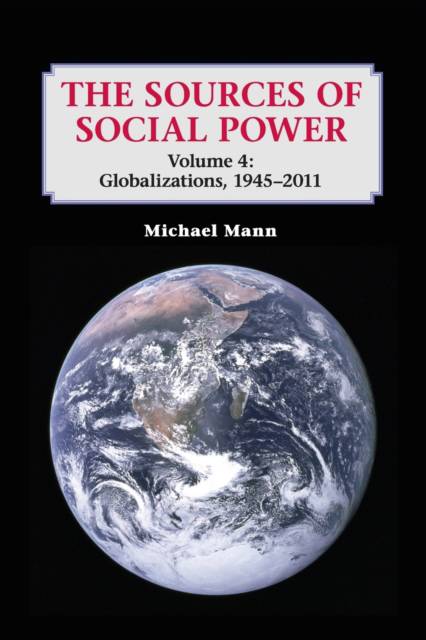
Distinguishing four sources of power - ideological, economic, military, and political - this series traces their interrelations throughout human history. This fourth volume of Michael Mann's analytical history of social power covers the period from 1945 to the present, focusing on the three major pillars of postwar global order: capitalism, the nation-state system, and the sole remaining empire of the world, the United States. In the course of this period, capitalism, nation-states, and empires interacted with one another and were transformed. Mann's key argument is that globalization is not just a single process, because there are globalizations of all four sources of social power, each of which has a different rhythm of development. Topics include the rise and beginnings of decline of the American Empire, the fall or transformation of communism (respectively, the Soviet Union and China), the shift from neo-Keynesianism to neoliberalism, and the three great crises emerging in this period - nuclear weapons, the great recession, and climate change.
Specificaties
Betrokkenen
- Auteur(s):
- Uitgeverij:
Inhoud
- Aantal bladzijden:
- 496
- Taal:
- Engels
Eigenschappen
- Productcode (EAN):
- 9781107610415
- Verschijningsdatum:
- 28/12/2012
- Uitvoering:
- Paperback
- Formaat:
- Trade paperback (VS)
- Afmetingen:
- 152 mm x 226 mm
- Gewicht:
- 680 g



Alleen bij Standaard Boekhandel
+ 133 punten op je klantenkaart van Standaard Boekhandel
CADEAU


Beoordelingen
We publiceren alleen reviews die voldoen aan de voorwaarden voor reviews. Bekijk onze voorwaarden voor reviews.