



Bedankt voor het vertrouwen het afgelopen jaar! Om jou te bedanken bieden we GRATIS verzending (in België) aan op alles gedurende de hele maand januari.
- Afhalen na 1 uur in een winkel met voorraad
- In januari gratis thuislevering in België
- Ruim aanbod met 7 miljoen producten
Bedankt voor het vertrouwen het afgelopen jaar! Om jou te bedanken bieden we GRATIS verzending (in België) aan op alles gedurende de hele maand januari.
- Afhalen na 1 uur in een winkel met voorraad
- In januari gratis thuislevering in België
- Ruim aanbod met 7 miljoen producten





Omschrijving
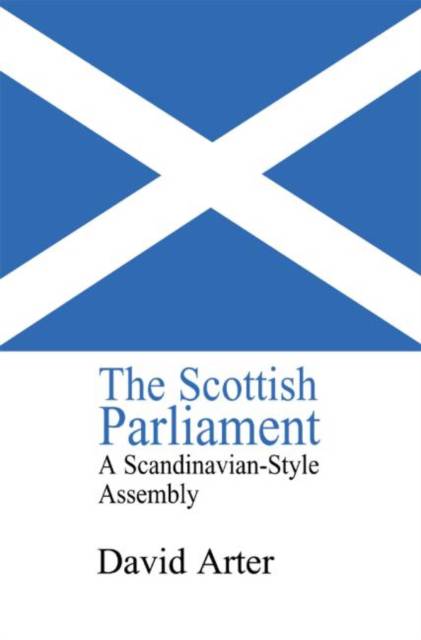
This book is unique in analysing the new Scottish Parliament from a systematically comparative perspective. Its basic premise is that since devolution in 1999 Scotland can be considered a Scandinavian-style democracy with several features of a Scandinavian-style parliament. The basic research question, therefore, is: 'Has the Scottish Parliament in its first four-year term manifested a Scandinavian-style politics in the sense that there has been a high incidence of inter-party negotiation within Parliament?' The architects of the Scottish Parliament saw the committees as the motor of a 'new politics' and gave them extensive powers. Outside Austria, only the Swedish and Icelandic committees have comparable powers. Accordingly, the study sets out to describe and analyse the workings of the committees in the Scottish, Swedish and Icelandic Parliaments. The concluding chapter also discusses the operation of the Danish, Finnish and Norwegian committees.
Specificaties
Betrokkenen
- Auteur(s):
- Uitgeverij:
Inhoud
- Aantal bladzijden:
- 312
- Taal:
- Engels
- Reeks:
Eigenschappen
- Productcode (EAN):
- 9780714655673
- Verschijningsdatum:
- 1/10/2003
- Uitvoering:
- Hardcover
- Formaat:
- Genaaid
- Afmetingen:
- 155 mm x 218 mm
- Gewicht:
- 530 g



Alleen bij Standaard Boekhandel
+ 610 punten op je klantenkaart van Standaard Boekhandel
SOLDEN


Beoordelingen
We publiceren alleen reviews die voldoen aan de voorwaarden voor reviews. Bekijk onze voorwaarden voor reviews.