



Je cadeautjes zeker op tijd in huis hebben voor de feestdagen? Kom langs in onze winkels en vind het perfecte geschenk!
- Afhalen na 1 uur in een winkel met voorraad
- Gratis thuislevering in België vanaf € 30
- Ruim aanbod met 7 miljoen producten
Je cadeautjes zeker op tijd in huis hebben voor de feestdagen? Kom langs in onze winkels en vind het perfecte geschenk!
- Afhalen na 1 uur in een winkel met voorraad
- Gratis thuislevering in België vanaf € 30
- Ruim aanbod met 7 miljoen producten





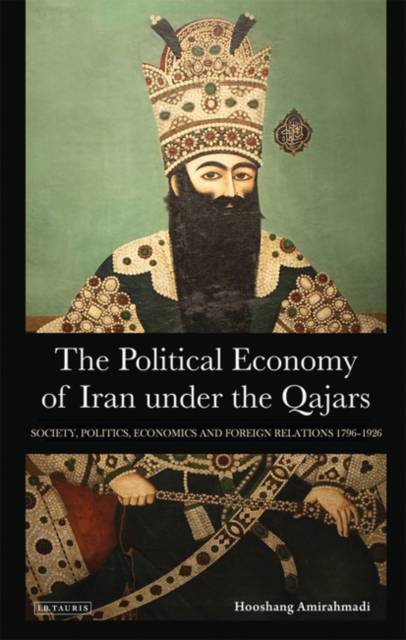
The Political Economy of Iran Under the Qajars
Society, Politics, Economics and Foreign Relations 1796-1926
Hooshang Amirahmadi
€ 296,95
+ 593 punten
Omschrijving
The political economy of Iran underwent the fundamental transition from feudalism to modernity from the early 19th to the 20th century: a period which was a vital watershed in Iran's historical development. This book provides a critical analysis of Iran's economic, social and political development and shows how the path to modernity, far from smooth, was hindered by both internal and international factors. These included a powerful monarchy with little interest in administrative and economic reform, a large aristocracy frequently holding vital provincial governorships and frustrating effective central government and a failure to create a modern civil service, military, banking, finance or communications - the essential infrastructure for economic development. Reformers were marginalised and business suffered. And the all-powerful ulema were a further brake on modernisation. On the international front, the rivalry of Britain and Russia compounded the problems: both acting to control Iran and to further their own interests.
Hooshang Amirahmadi explores the roots of present-day challenges to modernisation and progress and, using a wealth of primary sources and original research, has produced a work which is invaluable for students of modern Iranian history, politics and Iran's political economy.
Hooshang Amirahmadi explores the roots of present-day challenges to modernisation and progress and, using a wealth of primary sources and original research, has produced a work which is invaluable for students of modern Iranian history, politics and Iran's political economy.
Specificaties
Betrokkenen
- Auteur(s):
- Uitgeverij:
Inhoud
- Aantal bladzijden:
- 344
- Taal:
- Engels
- Reeks:
- Reeksnummer:
- nr. 30
Eigenschappen
- Productcode (EAN):
- 9781848856721
- Verschijningsdatum:
- 28/06/2012
- Uitvoering:
- Hardcover
- Formaat:
- Genaaid
- Afmetingen:
- 155 mm x 234 mm
- Gewicht:
- 680 g


Alleen bij Standaard Boekhandel
+ 593 punten op je klantenkaart van Standaard Boekhandel
CADEAU


Beoordelingen
We publiceren alleen reviews die voldoen aan de voorwaarden voor reviews. Bekijk onze voorwaarden voor reviews.