Standaard Boekhandel gebruikt cookies en gelijkaardige technologieën om de website goed te laten werken en je een betere surfervaring te bezorgen.
Hieronder kan je kiezen welke cookies je wilt inschakelen:
Technische en functionele cookies
Deze cookies zijn essentieel om de website goed te laten functioneren, en laten je toe om bijvoorbeeld in te loggen. Je kan deze cookies niet uitschakelen.
Analytische cookies
Deze cookies verzamelen anonieme informatie over het gebruik van onze website. Op die manier kunnen we de website beter afstemmen op de behoeften van de gebruikers.
Marketingcookies
Deze cookies delen je gedrag op onze website met externe partijen, zodat je op externe platformen relevantere advertenties van Standaard Boekhandel te zien krijgt.
Je cadeautjes zeker op tijd in huis hebben voor de feestdagen? Kom langs in onze winkels en vind het perfecte geschenk!
Afhalen na 1 uur in een winkel met voorraad
Gratis thuislevering in België vanaf € 30
Ruim aanbod met 7 miljoen producten
Je cadeautjes zeker op tijd in huis hebben voor de feestdagen? Kom langs in onze winkels en vind het perfecte geschenk!
Je kan maximaal 250 producten tegelijk aan je winkelmandje toevoegen. Verwijdere enkele producten uit je winkelmandje, of splits je bestelling op in meerdere bestellingen.
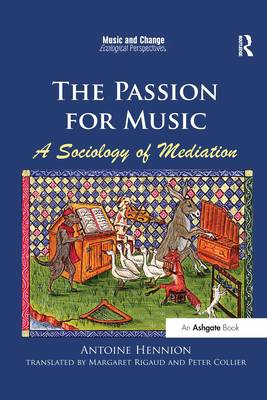
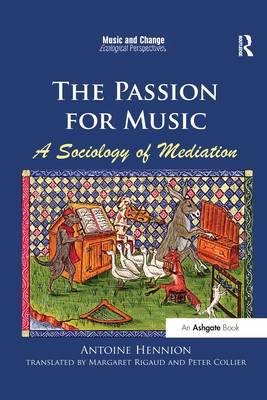
Music is an accumulation of mediators: instruments, languages, sheets, performers, scenes, media and so on. There is no musical object 'in itself'; music must always be made again. In this innovative book, Hennion turns the elusiveness of music into a resource for a pragmatic analysis: by which collective process do we make music appear among us? Rather than offering a sociology of music, The Passion for Music listens to the lesson provided by the case of music - this art of infinite mediations. Learning from music allows us to transform the paradigm to be offered by sociology, by confronting it (from Durkheim and Weber to Bourdieu) with a different way of considering objects. For this task, Hennion draws on aesthetics (Adorno) and art history (Haskell, Baxandall), as well as science and technology studies and popular music studies (Latour, Frith, DeNora). As part of that project, The Passion for Music presents a wide-ranging series of case studies, restoring attention to the rich and varied intermediaries through which music is brought to life: from the debate around the reinterpretation of baroque music, to the classroom, the rock scene, the classical music concert, Bach's 'social career' in the nineteenth and twentieth centuries, and the practices of music 'amateurs' today. This is the first English translation of one of the most important works of French scholarship on music and society.