



Je cadeautjes zeker op tijd in huis hebben voor de feestdagen? Kom langs in onze winkels en vind het perfecte geschenk!
- Afhalen na 1 uur in een winkel met voorraad
- Gratis thuislevering in België vanaf € 30
- Ruim aanbod met 7 miljoen producten
Je cadeautjes zeker op tijd in huis hebben voor de feestdagen? Kom langs in onze winkels en vind het perfecte geschenk!
- Afhalen na 1 uur in een winkel met voorraad
- Gratis thuislevering in België vanaf € 30
- Ruim aanbod met 7 miljoen producten





€ 8,45
+ 16 punten
Uitvoering
Omschrijving
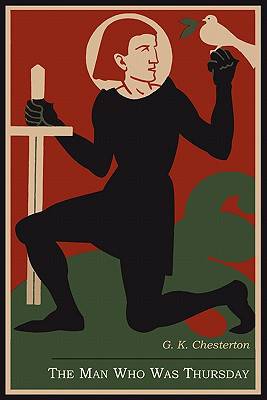
2011 Reprint of 1908 Edition. Full facsimile of the original edition, not reproduced with Optical Recognition Software. "The Man Who Was Thursday: A Nightmare" is a novel by G. K. Chesterton, first published in 1908. The book is sometimes referred to as a metaphysical thriller. Although it deals with anarchists, the novel is not an exploration or rebuttal of anarchist thought; Chesterton's ad hoc construction of "Philosophical Anarchism" is distinguished from ordinary anarchism and is referred to several times not so much as a rebellion against government but as a rebellion against God. The novel has been described as "one of the hidden hinges of twentieth-century writing, the place where, before our eyes, the nonsense-fantastical tradition of Lewis Carroll and Edward Lear pivots and becomes the nightmare-fantastical tradition of Kafka and Borges.
Specificaties
Betrokkenen
- Auteur(s):
- Uitgeverij:
Inhoud
- Aantal bladzijden:
- 196
- Taal:
- Engels
Eigenschappen
- Productcode (EAN):
- 9781614270126
- Verschijningsdatum:
- 30/04/2011
- Uitvoering:
- Paperback
- Formaat:
- Trade paperback (VS)
- Afmetingen:
- 150 mm x 226 mm
- Gewicht:
- 272 g


Alleen bij Standaard Boekhandel
+ 16 punten op je klantenkaart van Standaard Boekhandel
CADEAU


Beoordelingen
We publiceren alleen reviews die voldoen aan de voorwaarden voor reviews. Bekijk onze voorwaarden voor reviews.