



Bedankt voor het vertrouwen het afgelopen jaar! Om jou te bedanken bieden we GRATIS verzending (in België) aan op alles gedurende de hele maand januari.
- Afhalen na 1 uur in een winkel met voorraad
- In januari gratis thuislevering in België
- Ruim aanbod met 7 miljoen producten
Bedankt voor het vertrouwen het afgelopen jaar! Om jou te bedanken bieden we GRATIS verzending (in België) aan op alles gedurende de hele maand januari.
- Afhalen na 1 uur in een winkel met voorraad
- In januari gratis thuislevering in België
- Ruim aanbod met 7 miljoen producten





Omschrijving
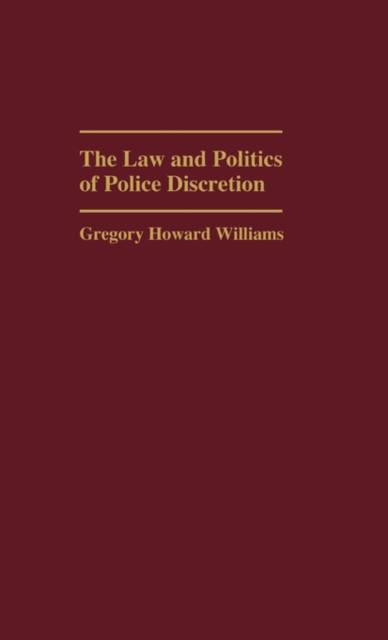
The author, a law professor and former deputy sheriff, discusses the problems attending the extensive discretion given to police officers on the job. The book focuses primarily on the decision to arrest and on the development of the mechanisms to control the discretionary nature of that decision. Convinced that individual prejudices can and do play a part in arrest decisions, Professor Williams evaluates alternatives designed to produce impartial and controlled law enforcement. He concludes that only through the collective efforts of the police, state and local government officials, and the judiciary can effective guidelines be formulated and implemented. Harvard Law Review
Specificaties
Betrokkenen
- Auteur(s):
- Uitgeverij:
Inhoud
- Aantal bladzijden:
- 232
- Taal:
- Engels
- Reeks:
Eigenschappen
- Productcode (EAN):
- 9780313240706
- Verschijningsdatum:
- 7/12/1984
- Uitvoering:
- Hardcover
- Formaat:
- Genaaid
- Afmetingen:
- 146 mm x 217 mm
- Gewicht:
- 444 g


Alleen bij Standaard Boekhandel
+ 322 punten op je klantenkaart van Standaard Boekhandel
SOLDEN


Beoordelingen
We publiceren alleen reviews die voldoen aan de voorwaarden voor reviews. Bekijk onze voorwaarden voor reviews.