



Je cadeautjes zeker op tijd in huis hebben voor de feestdagen? Kom langs in onze winkels en vind het perfecte geschenk!
- Afhalen na 1 uur in een winkel met voorraad
- Gratis thuislevering in België vanaf € 30
- Ruim aanbod met 7 miljoen producten
Je cadeautjes zeker op tijd in huis hebben voor de feestdagen? Kom langs in onze winkels en vind het perfecte geschenk!
- Afhalen na 1 uur in een winkel met voorraad
- Gratis thuislevering in België vanaf € 30
- Ruim aanbod met 7 miljoen producten





€ 61,45
+ 122 punten
Uitvoering
Omschrijving
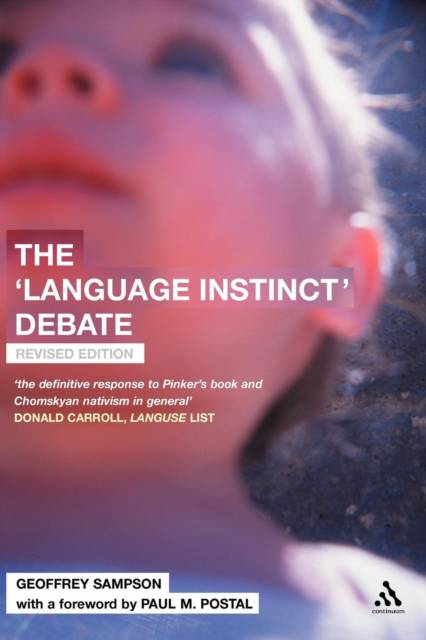
When it was first published in 1997, Geoffrey Sampson's Educating Eve was described as the definitive response to Steven Pinker's The Language Instinct and Noam Chomsky's nativism. In this revised and expanded new edition, Sampson revisits his original arguments in the light of fresh evidence that has emerged since the original publication. Since Chomsky revolutionized the study of language in the 1960s, it has increasingly come to be accepted that language and other knowledge structures are hard-wired in our genes. According to this view, human beings are born with a rich structure of cognition already in place. But people do not realize how thin the evidence for that idea is. The 'Language Instinct' Debate examines the various arguments for instinctive knowledge, and finds that each one rests on false premisses or embodies logical fallacies. The structures of language are shown to be purely cultural creations. With a new chapter entitled 'How People Really Speak' which uses corpus data to analyse how language is used in spontaneous English conversation, responses to critics, extensive revisions throughout, and a new preface by Paul Postal of New York University, this new edition will be an essential purchase for students, academics, and general readers interested in the debate about the 'language instinct'.
Specificaties
Betrokkenen
- Auteur(s):
- Uitgeverij:
Inhoud
- Aantal bladzijden:
- 240
- Taal:
- Engels
Eigenschappen
- Productcode (EAN):
- 9780826473851
- Verschijningsdatum:
- 1/04/2005
- Uitvoering:
- Paperback
- Formaat:
- Trade paperback (VS)
- Afmetingen:
- 160 mm x 235 mm
- Gewicht:
- 367 g



Alleen bij Standaard Boekhandel
+ 122 punten op je klantenkaart van Standaard Boekhandel
CADEAU


Beoordelingen
We publiceren alleen reviews die voldoen aan de voorwaarden voor reviews. Bekijk onze voorwaarden voor reviews.