



Bedankt voor het vertrouwen het afgelopen jaar! Om jou te bedanken bieden we GRATIS verzending (in België) aan op alles gedurende de hele maand januari.
- Afhalen na 1 uur in een winkel met voorraad
- In januari gratis thuislevering in België
- Ruim aanbod met 7 miljoen producten
Bedankt voor het vertrouwen het afgelopen jaar! Om jou te bedanken bieden we GRATIS verzending (in België) aan op alles gedurende de hele maand januari.
- Afhalen na 1 uur in een winkel met voorraad
- In januari gratis thuislevering in België
- Ruim aanbod met 7 miljoen producten





Omschrijving
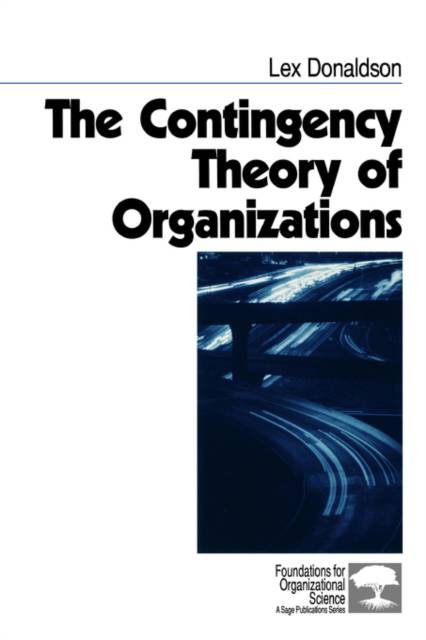
Written by one of the foremost scholars in the field, this volume presents a comprehensive, in-depth analysis of the theories, evidence and methodological issues of contingency theory - one of the major theoretical lenses used to view organizations. It includes both an appreciation of the coherency of contingency theory overall and a frank recognition of some of the deficiencies in contingency theory research. The coherent underlying model provides the platform from which to make good some of the deficiencies through a series of improvements in theory and method that chart the course for future research. The opening chapter presents a theoretical integration to provide the reader with an overview that makes sense of what is a large literature. It also argues that there is an underlying core paradigm that renders contingency theory coherent. The next chapters lay out the foundations of contingency theory by reviewing the pioneering contributors to theory and empirical research. This is followed by an examination of the causal models in the received bureaucracy research literature and an attempt to put them on a more truly contingency theory base. Chapters 7 and 8 examine in detail the concept of fit and its relationship with performance, including the empirical research studies. Chapter 9 presents possible new developments for contingency theory, to make it more coherent and, hopefully, valid. These new developments include the concepts of disequilibrium, quasi-fit and hetero-performance. All three are novel concepts that substantially revise and improve contingency theory. The final chapter offers suggestions on how to operationalize the ideas in this book in terms of hypotheses for future empirical research.
Specificaties
Betrokkenen
- Auteur(s):
- Uitgeverij:
Inhoud
- Aantal bladzijden:
- 344
- Taal:
- Engels
- Reeks:
Eigenschappen
- Productcode (EAN):
- 9780761915744
- Verschijningsdatum:
- 1/01/2001
- Uitvoering:
- Paperback
- Formaat:
- Trade paperback (VS)
- Afmetingen:
- 166 mm x 233 mm
- Gewicht:
- 476 g


Alleen bij Standaard Boekhandel
+ 476 punten op je klantenkaart van Standaard Boekhandel
SOLDEN


Beoordelingen
We publiceren alleen reviews die voldoen aan de voorwaarden voor reviews. Bekijk onze voorwaarden voor reviews.