


- Afhalen na 1 uur in een winkel met voorraad
- Gratis thuislevering in België vanaf € 30
- Ruim aanbod met 7 miljoen producten
- Afhalen na 1 uur in een winkel met voorraad
- Gratis thuislevering in België vanaf € 30
- Ruim aanbod met 7 miljoen producten





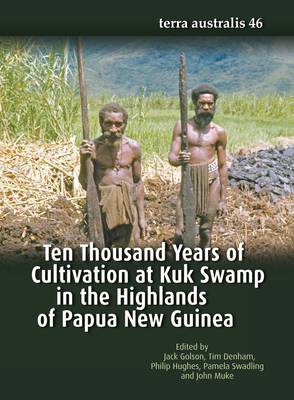
Ten Thousand Years of Cultivation at Kuk Swamp in the Highlands of Papua New Guinea
€ 126,95
+ 253 punten
Omschrijving
Kuk is a settlement at c. 1600 m altitude in the upper Wahgi Valley of the Western Highlands Province of Papua New Guinea, near Mount Hagen, the provincial capital. The site forms part of the highland spine that runs for more than 2500 km from the western head of the island of New Guinea to the end of its eastern tail. Until the early 1930s, when the region was first explored by European outsiders, it was thought to be a single, uninhabited mountain chain. Instead, it was found to be a complex area of valleys and basins inhabited by large populations of people and pigs, supported by the intensive cultivation of the tropical American sweet potato on the slopes above swampy valley bottoms. With the end of World War II, the area, with others, became a focus for the development of coffee and tea plantations, of which the establishment of Kuk Research Station was a result. Large-scale drainage of the swamps produced abundant evidence in the form of stone axes and preserved wooden digging sticks and spades for their past use in cultivation. Investigations in 1966 at a tea plantation in the upper Wahgi Valley by a small team from The Australian National University yielded a date of over 2000 years ago for a wooden stick collected from the bottom of a prehistoric ditch. The establishment of Kuk Research Station a few kilometres away shortly afterwards provided an ideal opportunity for a research project.
Specificaties
Betrokkenen
- Uitgeverij:
Inhoud
- Aantal bladzijden:
- 546
- Taal:
- Engels
- Reeks:
- Reeksnummer:
- nr. 46
Eigenschappen
- Productcode (EAN):
- 9781760461157
- Verschijningsdatum:
- 7/07/2017
- Uitvoering:
- Paperback
- Formaat:
- Trade paperback (VS)
- Afmetingen:
- 205 mm x 279 mm
- Gewicht:
- 1601 g


Alleen bij Standaard Boekhandel
+ 253 punten op je klantenkaart van Standaard Boekhandel
Cadeau

AANGERADEN


Beoordelingen
We publiceren alleen reviews die voldoen aan de voorwaarden voor reviews. Bekijk onze voorwaarden voor reviews.