



Je cadeautjes zeker op tijd in huis hebben voor de feestdagen? Kom langs in onze winkels en vind het perfecte geschenk!
- Afhalen na 1 uur in een winkel met voorraad
- Gratis thuislevering in België vanaf € 30
- Ruim aanbod met 7 miljoen producten
Je cadeautjes zeker op tijd in huis hebben voor de feestdagen? Kom langs in onze winkels en vind het perfecte geschenk!
- Afhalen na 1 uur in een winkel met voorraad
- Gratis thuislevering in België vanaf € 30
- Ruim aanbod met 7 miljoen producten





Omschrijving
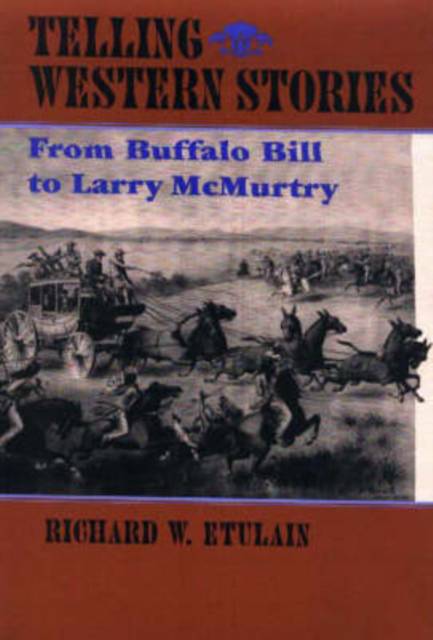
What has the western of literature and film contributed to American culture? Richard Etulain, the leading cultural historian of the West, answers that question by tracing four distinct storytelling traditions and exploring the indelible images each has left in the public's mind over the past 125 years. Our images of cowboys, lawmen, outlaws, and Indians come from a collage of sources, including Buffalo Bill, Frederick Jackson Turner, Calamity Jane, Mary Hallock Foote, Geronimo, Mourning Dove, Owen Wister, Zane Grey, Walter Noble Burns, John Ford, Louis L'Amour, Wallace Stegner, Patricia Nelson Limerick, Leslie Marmon Silko, and Larry McMurtry. Etulain begins with the dominant image conveyed in Wild West shows and dime novels of the late nineteenth century--the West as a place of adventure and danger. In the early twentieth century stories by women and Indians appeared, but they were soon overlooked and not rediscovered until the 1970s. The period from the 1920s to the 1950s represents the classic era of western movies and novels--of cavalry charges to save the day and heroes in white hats. But since the 1960s a counter story has emerged, one of ambiguity and complexity that often turned upside down our notions about what really mattered in how we look at the West. Etulain carefully explores why stories of the frontier and American West still rival those of the American Civil War as the country's most popular tales, and he shows how narratives that persisted relatively unchanged for a century have moved in notable new directions since the 1960s.
Specificaties
Betrokkenen
- Auteur(s):
- Uitgeverij:
Inhoud
- Aantal bladzijden:
- 190
- Taal:
- Engels
- Reeks:
Eigenschappen
- Productcode (EAN):
- 9780826321404
- Verschijningsdatum:
- 1/08/1999
- Uitvoering:
- Paperback
- Formaat:
- Trade paperback (VS)
- Afmetingen:
- 154 mm x 229 mm
- Gewicht:
- 276 g


Alleen bij Standaard Boekhandel
+ 76 punten op je klantenkaart van Standaard Boekhandel
CADEAU


Beoordelingen
We publiceren alleen reviews die voldoen aan de voorwaarden voor reviews. Bekijk onze voorwaarden voor reviews.