


- Afhalen na 1 uur in een winkel met voorraad
- Gratis thuislevering in België vanaf € 30
- Ruim aanbod met 7 miljoen producten
- Afhalen na 1 uur in een winkel met voorraad
- Gratis thuislevering in België vanaf € 30
- Ruim aanbod met 7 miljoen producten





€ 195,45
+ 390 punten
Omschrijving
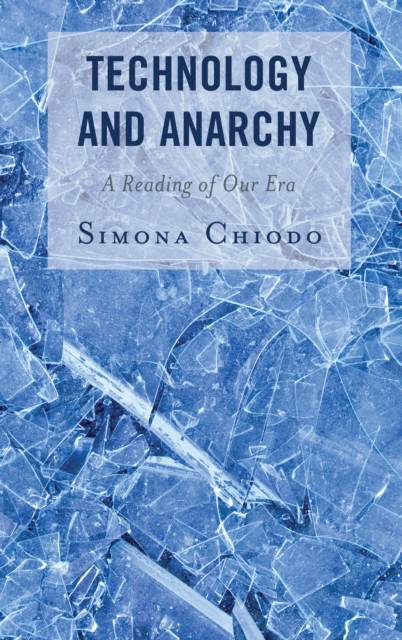
In Technology and Anarchy: A Reading of Our Era, Simona Chiodo argues that our technological era can be read as the most radical form of anarchism ever experienced. People are not only removing the role of the expert as a mediator, but also trying, for the first time in history, to replace the role of a transcendent god itself by creating, especially through information technology, a totally immanent technological entity characterized by the typical ontological prerogatives of the divine: omnipresence (by being everywhere), omniscience (by knowing everything, especially about us), omnipotence (by having power, especially over us), and inscrutability. Chiodo proposes a novel view of our technological era by reading it as the last step of a precise trajectory of Western thought, i.e. as the most radical form of anarchism we have ever experienced, due to the crisis of the founding epistemological relationship between ideality and reality. By doing this, Chiodo helps fill the gap between technological innovation and the humanities, which is becoming an emerging research goal that is more and more urgent in order to face the greatest challenges of our present and future.
Specificaties
Betrokkenen
- Auteur(s):
- Uitgeverij:
Inhoud
- Aantal bladzijden:
- 166
- Taal:
- Engels
- Reeks:
Eigenschappen
- Productcode (EAN):
- 9781793632944
- Verschijningsdatum:
- 4/12/2020
- Uitvoering:
- Hardcover
- Formaat:
- Genaaid
- Afmetingen:
- 152 mm x 229 mm
- Gewicht:
- 412 g


Alleen bij Standaard Boekhandel
+ 390 punten op je klantenkaart van Standaard Boekhandel
Cadeau

AANGERADEN


Beoordelingen
We publiceren alleen reviews die voldoen aan de voorwaarden voor reviews. Bekijk onze voorwaarden voor reviews.