



Je cadeautjes zeker op tijd in huis hebben voor de feestdagen? Kom langs in onze winkels en vind het perfecte geschenk!
- Afhalen na 1 uur in een winkel met voorraad
- Gratis thuislevering in België vanaf € 30
- Ruim aanbod met 7 miljoen producten
Je cadeautjes zeker op tijd in huis hebben voor de feestdagen? Kom langs in onze winkels en vind het perfecte geschenk!
- Afhalen na 1 uur in een winkel met voorraad
- Gratis thuislevering in België vanaf € 30
- Ruim aanbod met 7 miljoen producten





€ 233,95
+ 467 punten
Uitvoering
Omschrijving
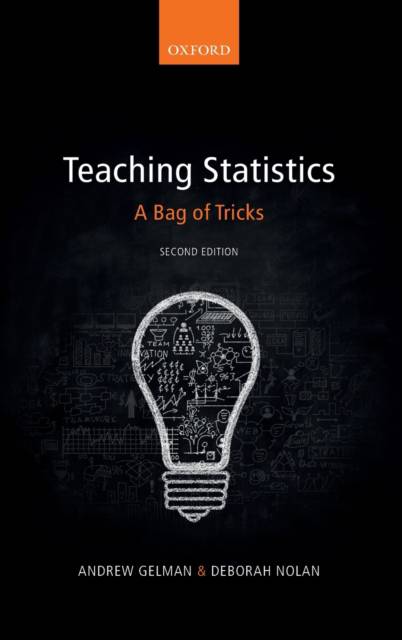
Students in the sciences, economics, social sciences, and medicine take an introductory statistics course. And yet statistics can be notoriously difficult for instructors to teach and for students to learn. To help overcome these challenges, Gelman and Nolan have put together this fascinating and thought-provoking book. Based on years of teaching experience the book provides a wealth of demonstrations, activities, examples, and projects that involve active student participation. Part I of the book presents a large selection of activities for introductory statistics courses and has chapters such as 'First week of class'- with exercises to break the ice and get students talking; then descriptive statistics, graphics, linear regression, data collection (sampling and experimentation), probability, inference, and statistical communication. Part II gives tips on what works and what doesn't, how to set up effective demonstrations, how to encourage students to participate in class and to work effectively in group projects. Course plans for introductory statistics, statistics for social scientists, and communication and graphics are provided. Part III presents material for more advanced courses on topics such as decision theory, Bayesian statistics, sampling, and data science.
Specificaties
Betrokkenen
- Auteur(s):
- Uitgeverij:
Inhoud
- Aantal bladzijden:
- 422
- Taal:
- Engels
Eigenschappen
- Productcode (EAN):
- 9780198785699
- Verschijningsdatum:
- 4/07/2017
- Uitvoering:
- Hardcover
- Formaat:
- Genaaid
- Afmetingen:
- 157 mm x 236 mm
- Gewicht:
- 857 g



Alleen bij Standaard Boekhandel
+ 467 punten op je klantenkaart van Standaard Boekhandel
CADEAU


Beoordelingen
We publiceren alleen reviews die voldoen aan de voorwaarden voor reviews. Bekijk onze voorwaarden voor reviews.