



Bedankt voor het vertrouwen het afgelopen jaar! Om jou te bedanken bieden we GRATIS verzending (in België) aan op alles gedurende de hele maand januari.
- Afhalen na 1 uur in een winkel met voorraad
- Gratis thuislevering in België vanaf € 30
- Ruim aanbod met 7 miljoen producten
Bedankt voor het vertrouwen het afgelopen jaar! Om jou te bedanken bieden we GRATIS verzending (in België) aan op alles gedurende de hele maand januari.
- Afhalen na 1 uur in een winkel met voorraad
- Gratis thuislevering in België vanaf € 30
- Ruim aanbod met 7 miljoen producten





€ 125,95
+ 251 punten
Omschrijving
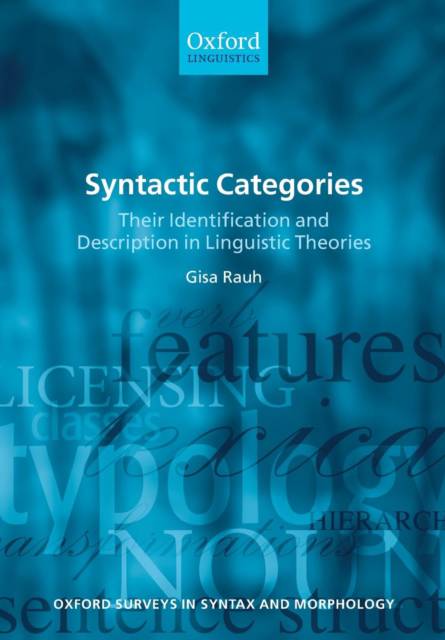
This book offers a systematic account of syntactic categories - the building blocks of sentences and the units of grammatical analysis - and explains their place in different theories of language. It sets out and clarifies the conflicting definitions of competing frameworks which frequently make it hard or impossible to compare grammars. Gisa Rauh describes the history and nature of traditional and contemporary accounts and definitions of grammatical categories. She explains their properties and use in generative, cognitive, and functional theories, and considers their function in language typology. She distinguishes between the cognitive functions of categories that relate to traditional parts of speech and serve to structure a language's lexicon; and those which determine the syntactic behaviour of the linguistic items they specify. Professor Rauh illustrates her account with a wide range of examples. Her clear and balanced exposition will be welcomed by students and scholars in all branches of linguistics as well as by those in related subjects such as computational science and the philosophy of language.
Specificaties
Betrokkenen
- Auteur(s):
- Uitgeverij:
Inhoud
- Aantal bladzijden:
- 456
- Taal:
- Engels
- Reeks:
Eigenschappen
- Productcode (EAN):
- 9780199281435
- Verschijningsdatum:
- 29/07/2010
- Uitvoering:
- Paperback
- Formaat:
- Trade paperback (VS)
- Afmetingen:
- 170 mm x 244 mm
- Gewicht:
- 771 g


Alleen bij Standaard Boekhandel
+ 251 punten op je klantenkaart van Standaard Boekhandel
CADEAU


Beoordelingen
We publiceren alleen reviews die voldoen aan de voorwaarden voor reviews. Bekijk onze voorwaarden voor reviews.