



Bedankt voor het vertrouwen het afgelopen jaar! Om jou te bedanken bieden we GRATIS verzending (in België) aan op alles gedurende de hele maand januari.
- Afhalen na 1 uur in een winkel met voorraad
- In januari gratis thuislevering in België
- Ruim aanbod met 7 miljoen producten
Bedankt voor het vertrouwen het afgelopen jaar! Om jou te bedanken bieden we GRATIS verzending (in België) aan op alles gedurende de hele maand januari.
- Afhalen na 1 uur in een winkel met voorraad
- In januari gratis thuislevering in België
- Ruim aanbod met 7 miljoen producten





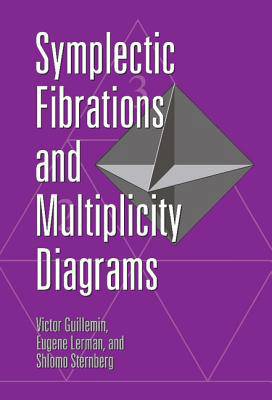
Symplectic Fibrations and Multiplicity Diagrams
Victor Guillemin, Eugene Lerman, Shlomo Sternberg
Hardcover | Engels
€ 217,95
+ 435 punten
Uitvoering
Omschrijving
Multiplicity diagrams can be viewed as schemes for describing the phenomenon of "symmetry breaking" in quantum physics. The subject of this book is the multiplicity diagrams associated with the classical groups U(n), O(n), etc. It presents such topics as asymptotic distributions of multiplicities, hierarchical patterns in multiplicity diagrams, lacunae, and the multiplicity diagrams of the rank 2 and rank 3 groups. The authors take a novel approach, using the techniques of symplectic geometry. The book develops in detail some themes which were touched on in the highly successful Symplectic Techniques in Physics by V. Guillemin and S. Sternberg (CUP, 1984), including the geometry of the moment map, the Duistermaat-Heckman theorem, the interplay between coadjoint orbits and representation theory, and quantization. Students and researchers in geometry and mathematical physics will find this book fascinating.
Specificaties
Betrokkenen
- Auteur(s):
- Uitgeverij:
Inhoud
- Aantal bladzijden:
- 240
- Taal:
- Engels
Eigenschappen
- Productcode (EAN):
- 9780521443234
- Verschijningsdatum:
- 28/09/1996
- Uitvoering:
- Hardcover
- Formaat:
- Genaaid
- Afmetingen:
- 158 mm x 235 mm
- Gewicht:
- 512 g


Alleen bij Standaard Boekhandel
+ 435 punten op je klantenkaart van Standaard Boekhandel
SOLDEN


Beoordelingen
We publiceren alleen reviews die voldoen aan de voorwaarden voor reviews. Bekijk onze voorwaarden voor reviews.