Standaard Boekhandel gebruikt cookies en gelijkaardige technologieën om de website goed te laten werken en je een betere surfervaring te bezorgen.
Hieronder kan je kiezen welke cookies je wilt inschakelen:
Technische en functionele cookies
Deze cookies zijn essentieel om de website goed te laten functioneren, en laten je toe om bijvoorbeeld in te loggen. Je kan deze cookies niet uitschakelen.
Analytische cookies
Deze cookies verzamelen anonieme informatie over het gebruik van onze website. Op die manier kunnen we de website beter afstemmen op de behoeften van de gebruikers.
Marketingcookies
Deze cookies delen je gedrag op onze website met externe partijen, zodat je op externe platformen relevantere advertenties van Standaard Boekhandel te zien krijgt.
Bedankt voor het vertrouwen het afgelopen jaar! Om jou te bedanken bieden we GRATIS verzending (in België) aan op alles gedurende de hele maand januari.
Afhalen na 1 uur in een winkel met voorraad
Gratis thuislevering in België vanaf € 30
Ruim aanbod met 7 miljoen producten
Bedankt voor het vertrouwen het afgelopen jaar! Om jou te bedanken bieden we GRATIS verzending (in België) aan op alles gedurende de hele maand januari.
Je kan maximaal 250 producten tegelijk aan je winkelmandje toevoegen. Verwijdere enkele producten uit je winkelmandje, of splits je bestelling op in meerdere bestellingen.
In januari gratis thuislevering in België (via bpost)
Gratis levering in je Standaard Boekhandel
Omschrijving
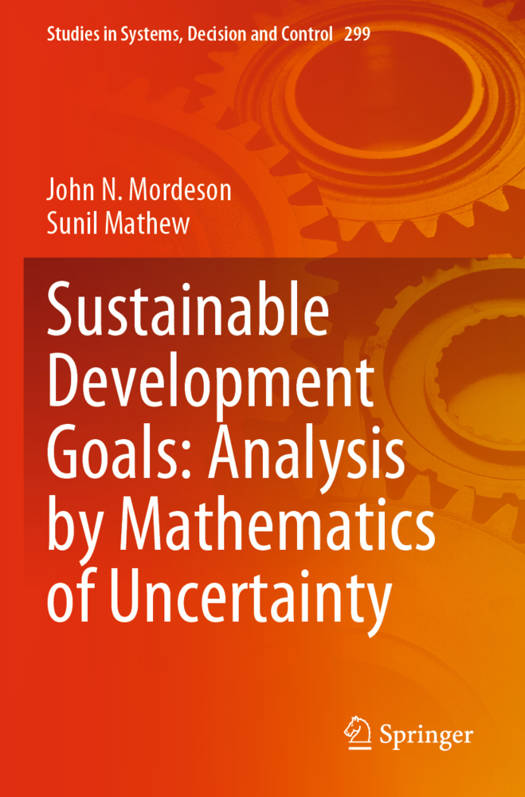
This book uses mathematics of uncertainty to examine how well countries are achieving the 17 Sustainable Development Goals (SDGs) set by the members of the United Nations, with a focus on climate change, human trafficking and modern slavery. Although this approach has never been used before, mathematics of uncertainty is well suited to exploring these topics due to the lack of accurate data available. The authors place several scientific studies in a mathematical setting to pave the way for future research on issues of sustainability, climate change, human trafficking and modern slavery to using a wide range of mathematical techniques. Moreover, the book ranks countries in terms of their achievement of not only the SDGs, but in particular those SDGs pertinent to climate change, human trafficking, and modern slavery, and highlights the deficiencies in the foster care system that lead to human trafficking. As such it is an excellent reference resource for advanced undergraduate and graduate students in mathematics and the social sciences, as well as for researchers and teachers.