



Bedankt voor het vertrouwen het afgelopen jaar! Om jou te bedanken bieden we GRATIS verzending (in België) aan op alles gedurende de hele maand januari.
- Afhalen na 1 uur in een winkel met voorraad
- In januari gratis thuislevering in België
- Ruim aanbod met 7 miljoen producten
Bedankt voor het vertrouwen het afgelopen jaar! Om jou te bedanken bieden we GRATIS verzending (in België) aan op alles gedurende de hele maand januari.
- Afhalen na 1 uur in een winkel met voorraad
- In januari gratis thuislevering in België
- Ruim aanbod met 7 miljoen producten





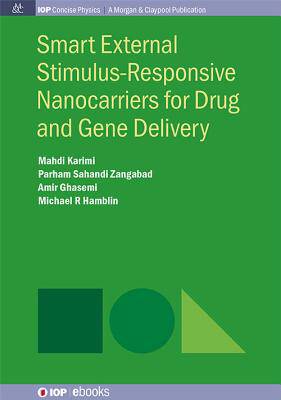
Smart External Stimulus-Responsive Nanocarriers for Drug and Gene Delivery
Mahdi Karimi, Parham Sahandi Zangabad, Amir Ghasemi
€ 64,45
+ 128 punten
Uitvoering
Omschrijving
The concept of smart drug delivery vehicles involves designing and preparing a nanostructure (or microstructure) that can be loaded with a cargo, this can be a therapeutic drug, a contrast agent for imaging, or a nucleic acid for gene therapy. The nanocarrier serves to protect the cargo from degradation by enzymes in the body, to enhance the solubility of insoluble drugs, to extend the circulation half-life, and to enhance its penetration and accumulation at the target site. Importantly, smart nanocarriers can be designed to be responsive to a specific stimulus, so that the cargo is only released or activated when desired. In this volume we cover smart nanocarriers that respond to externally applied stimuli that usually involve application of physical energy. This physical energy can be applied from outside the body and can either cause cargo release, or can activate the nanostructure to be cytotoxic, or both. The stimuli covered include light of various wavelengths (ultraviolet, visible or infrared), temperature (increased or decreased), magnetic fields (used to externally manipulate nanostructures and to activate them), ultrasound, and electrical and mechanical forces. Finally we discuss the issue of nanotoxicology and the future scope of the field.
Specificaties
Betrokkenen
- Auteur(s):
- Uitgeverij:
Inhoud
- Aantal bladzijden:
- 155
- Taal:
- Engels
- Reeks:
Eigenschappen
- Productcode (EAN):
- 9781681741383
- Verschijningsdatum:
- 1/12/2015
- Uitvoering:
- Paperback
- Formaat:
- Trade paperback (VS)
- Afmetingen:
- 178 mm x 254 mm
- Gewicht:
- 176 g


Alleen bij Standaard Boekhandel
+ 128 punten op je klantenkaart van Standaard Boekhandel
SOLDEN


Beoordelingen
We publiceren alleen reviews die voldoen aan de voorwaarden voor reviews. Bekijk onze voorwaarden voor reviews.