



Bedankt voor het vertrouwen het afgelopen jaar! Om jou te bedanken bieden we GRATIS verzending (in België) aan op alles gedurende de hele maand januari.
- Afhalen na 1 uur in een winkel met voorraad
- Gratis thuislevering in België vanaf € 30
- Ruim aanbod met 7 miljoen producten
Bedankt voor het vertrouwen het afgelopen jaar! Om jou te bedanken bieden we GRATIS verzending (in België) aan op alles gedurende de hele maand januari.
- Afhalen na 1 uur in een winkel met voorraad
- Gratis thuislevering in België vanaf € 30
- Ruim aanbod met 7 miljoen producten





€ 55,45
+ 110 punten
Omschrijving
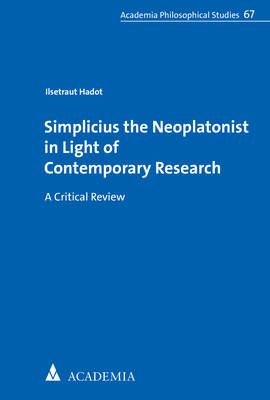
This book, translated from the French, offers a synthesis of modern research devoted to Simplicius's life and to three of his five commentaries: On Epictetus' Handbook, On Aristotle's De anima, On Aristotle's Categories. Its biographical part brings to light the historical role played by this Neoplatonic philosopher. Born in Cilicia, Asia Minor, he studied in Alexandria and Athens and apparently ended his life teaching in Syria on the frontier between the Byzantine and Sassanide Empires. His role was that of a mediator between the Greco-Roman world and philosophy and Syriac philosophy, which would feed Arabic philosophy at its beginning. The second part of the book, devoted to doctrinal and authorship issues, also deals with the underlying pedagogical curriculum and methods proper to Neoplatonic commentaries, which modern interpretation all too often tends to neglect in studies on Simplicius and other Neoplatonists.
Specificaties
Betrokkenen
- Auteur(s):
- Uitgeverij:
Inhoud
- Aantal bladzijden:
- 262
- Taal:
- Engels
- Reeks:
- Reeksnummer:
- nr. 67
Eigenschappen
- Productcode (EAN):
- 9783896658944
- Uitvoering:
- Paperback
- Afmetingen:
- 156 mm x 19 mm
- Gewicht:
- 429 g


Alleen bij Standaard Boekhandel
+ 110 punten op je klantenkaart van Standaard Boekhandel
CADEAU


Beoordelingen
We publiceren alleen reviews die voldoen aan de voorwaarden voor reviews. Bekijk onze voorwaarden voor reviews.