



Bedankt voor het vertrouwen het afgelopen jaar! Om jou te bedanken bieden we GRATIS verzending (in België) aan op alles gedurende de hele maand januari.
- Afhalen na 1 uur in een winkel met voorraad
- In januari gratis thuislevering in België
- Ruim aanbod met 7 miljoen producten
Bedankt voor het vertrouwen het afgelopen jaar! Om jou te bedanken bieden we GRATIS verzending (in België) aan op alles gedurende de hele maand januari.
- Afhalen na 1 uur in een winkel met voorraad
- In januari gratis thuislevering in België
- Ruim aanbod met 7 miljoen producten





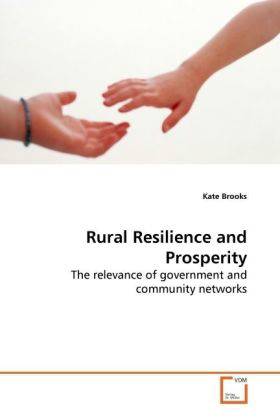
Rural Resilience and Prosperity
The relevance of government and community networks
Kate Brooks
Paperback | Engels
€ 77,95
+ 155 punten
Omschrijving
Society centred interpretations of social capital
are inadequate to explain the economic fortunes and
social prosperity of rural Australian communities.
This research sought to assess the relationship
between different interpretations of social capital
and rural communities resilience and prosperity.
The primary objective was to test the association
asserted between levels of social capital and
prosperity and resilience in the rural Australian
context.
The research highlights three notable issues.
Surveying social capital with society-centred
approaches is only effective in establishing the well
being of communities which relates to their
resilience, not an ability to prosper. Secondly, the
responsibilities for social capital generation
adopted by governments dictates the manner and degree
to which they acknowledge and utilise bridging and
linking networks, affecting the role social capital
is perceived to play in communities. Lastly, while
social capital is regarded as a normative social
factor, rather than being comprised of different and
dynamic elements affecting communities ability to
prosper, the concept will remain unable to
effectively contribute to the policy domain.
are inadequate to explain the economic fortunes and
social prosperity of rural Australian communities.
This research sought to assess the relationship
between different interpretations of social capital
and rural communities resilience and prosperity.
The primary objective was to test the association
asserted between levels of social capital and
prosperity and resilience in the rural Australian
context.
The research highlights three notable issues.
Surveying social capital with society-centred
approaches is only effective in establishing the well
being of communities which relates to their
resilience, not an ability to prosper. Secondly, the
responsibilities for social capital generation
adopted by governments dictates the manner and degree
to which they acknowledge and utilise bridging and
linking networks, affecting the role social capital
is perceived to play in communities. Lastly, while
social capital is regarded as a normative social
factor, rather than being comprised of different and
dynamic elements affecting communities ability to
prosper, the concept will remain unable to
effectively contribute to the policy domain.
Specificaties
Betrokkenen
- Auteur(s):
- Uitgeverij:
Inhoud
- Aantal bladzijden:
- 372
- Taal:
- Engels
Eigenschappen
- Productcode (EAN):
- 9783639124422
- Uitvoering:
- Paperback


Alleen bij Standaard Boekhandel
+ 155 punten op je klantenkaart van Standaard Boekhandel
SOLDEN


Beoordelingen
We publiceren alleen reviews die voldoen aan de voorwaarden voor reviews. Bekijk onze voorwaarden voor reviews.