



Je cadeautjes zeker op tijd in huis hebben voor de feestdagen? Kom langs in onze winkels en vind het perfecte geschenk!
- Afhalen na 1 uur in een winkel met voorraad
- Gratis thuislevering in België vanaf € 30
- Ruim aanbod met 7 miljoen producten
Je cadeautjes zeker op tijd in huis hebben voor de feestdagen? Kom langs in onze winkels en vind het perfecte geschenk!
- Afhalen na 1 uur in een winkel met voorraad
- Gratis thuislevering in België vanaf € 30
- Ruim aanbod met 7 miljoen producten





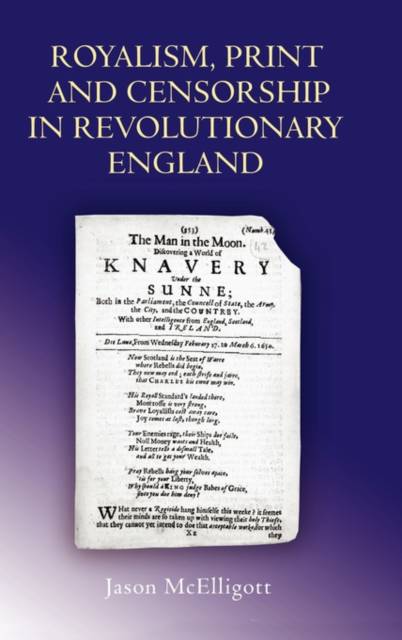
Omschrijving
This is a study of a remarkable set of royalist newsbooks produced in conditions of strict secrecy in London during the late 1640s. It uses these flimsy, ephemeral sheets of paper to rethink the nature of both royalism and Civil War allegiance. Royalism, Print and Censorship in Revolutionary England moves beyond the simple and simplistic dichotomies of 'absolutism' versus 'constitutionalism'. In doing so, it offers a nuanced, innovative and exciting vision of a strangely neglected aspect of the Civil Wars. Print has always been seen as a radical, destabilizing force: an agent of social change and revolution. Royalism, Print and Censorship in Revolutionary England demonstrates, by contrast, how lively, vibrant and exciting the use of print as an agent of conservatism could be. It seeks to rescue the history of polemic in 1640s and 1650s England from an undue preoccupation with the factional squabbles of leading politicians. In doing so, it offers a fundamental reappraisal of the theory and practice of censorship in early-modern England, and of the way in which we should approach the history of books and print-culture. JASON McELLIGOTT is the J.P.R. Lyell Research Fellow in the History of the Early Modern Printed Book at Merton College, Oxford.
Specificaties
Betrokkenen
- Auteur(s):
- Uitgeverij:
Inhoud
- Aantal bladzijden:
- 284
- Taal:
- Engels
- Reeks:
- Reeksnummer:
- nr. 6
Eigenschappen
- Productcode (EAN):
- 9781843833239
- Verschijningsdatum:
- 16/10/2007
- Uitvoering:
- Hardcover
- Formaat:
- Genaaid
- Afmetingen:
- 166 mm x 236 mm
- Gewicht:
- 716 g


Alleen bij Standaard Boekhandel
+ 354 punten op je klantenkaart van Standaard Boekhandel
CADEAU


Beoordelingen
We publiceren alleen reviews die voldoen aan de voorwaarden voor reviews. Bekijk onze voorwaarden voor reviews.