



Bedankt voor het vertrouwen het afgelopen jaar! Om jou te bedanken bieden we GRATIS verzending (in België) aan op alles gedurende de hele maand januari.
- Afhalen na 1 uur in een winkel met voorraad
- In januari gratis thuislevering in België
- Ruim aanbod met 7 miljoen producten
Bedankt voor het vertrouwen het afgelopen jaar! Om jou te bedanken bieden we GRATIS verzending (in België) aan op alles gedurende de hele maand januari.
- Afhalen na 1 uur in een winkel met voorraad
- In januari gratis thuislevering in België
- Ruim aanbod met 7 miljoen producten





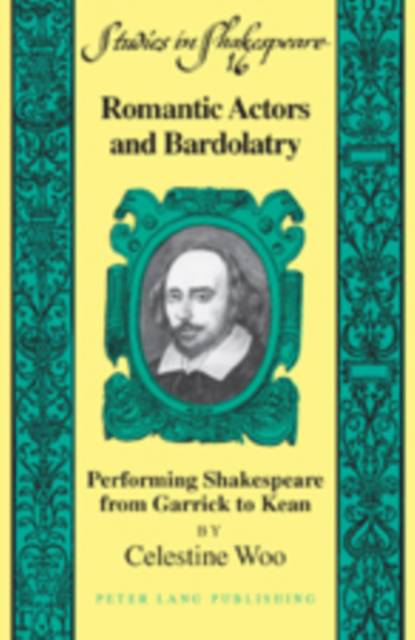
Romantic Actors and Bardolatry; Performing Shakespeare from Garrick to Kean
Performing Shakespeare from Garrick to Kean
Celestine Woo
€ 198,95
+ 397 punten
Omschrijving
Bardolatry, that whimsical term referring to Shakespeare's rise to canonical status as well as to his worshippers' adulation, solidified within the theatrical discourses of the eighteenth century and the British Romantic era. Celestine Woo examines the era's four most celebrated Shakespeare performers in London - David Garrick, John Philip Kemble, Sarah Siddons, and Edmund Kean - arguing that they broadened and altered the boundaries of Shakespearean discourse in specific ways, offering and modeling novel paradigms by which to apprehend Shakespeare, and thus contributing to the growth of bardolatry as a discursive phenomenon. Using Pierre Bourdieu as a model, Woo traces the development of Shakespearean discourse as a field of cultural production, shaped by these actors. By examining their disparate approaches to performing Shakespeare, she reveals that Shakespeare as an icon became commodified, politicized, gendered, and increasingly appropriated within literary and dramatic discourse as a result of the influences of these four performers. Her analysis deepens our understanding of the processes by which Shakespeare was institutionalized as a figure representing national character, human nature, and the breadth of human experience.
Specificaties
Betrokkenen
- Auteur(s):
- Uitgeverij:
Inhoud
- Aantal bladzijden:
- 212
- Taal:
- Engels
- Reeks:
- Reeksnummer:
- nr. 16
Eigenschappen
- Productcode (EAN):
- 9781433101632
- Verschijningsdatum:
- 23/07/2008
- Uitvoering:
- Hardcover
- Formaat:
- Genaaid
- Afmetingen:
- 152 mm x 229 mm
- Gewicht:
- 476 g


Alleen bij Standaard Boekhandel
+ 397 punten op je klantenkaart van Standaard Boekhandel
SOLDEN


Beoordelingen
We publiceren alleen reviews die voldoen aan de voorwaarden voor reviews. Bekijk onze voorwaarden voor reviews.