


- Afhalen na 1 uur in een winkel met voorraad
- Gratis thuislevering in België vanaf € 30
- Ruim aanbod met 7 miljoen producten
- Afhalen na 1 uur in een winkel met voorraad
- Gratis thuislevering in België vanaf € 30
- Ruim aanbod met 7 miljoen producten





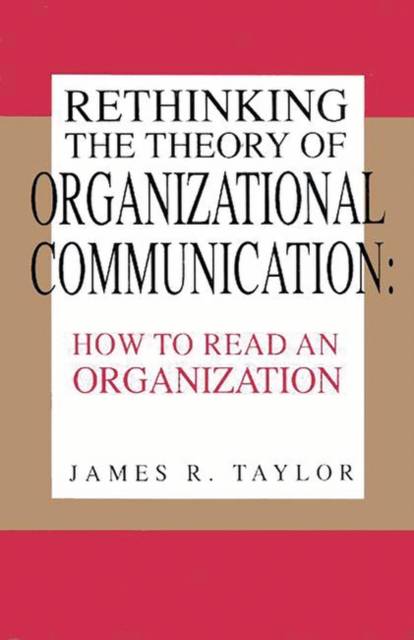
Rethinking the Theory of Organizational Communication
How to Read an Organization
James R Taylor
Paperback | Engels
€ 98,45
+ 196 punten
Uitvoering
Eenvoudig bestellen
Veilig betalen


Gratis thuislevering vanaf € 30 (via bpost)
Gratis levering in je Standaard Boekhandel
Omschrijving
The first part of this new book concentrates on the office automation phenomenon. Chapter 1 sketches some of its disappointments and sets the stage for the chapters to follow. In Chapter 2, the author argues that images of organization incorporate what has been called a worldview and are thus inevitably relativistic in their orientation. This allows the author to criticize some common assumptions about the nature of organization, but it equally introduces a theme that is central to his theory, and that will be picked up again in a later chapter. Chapter 3 gets to the heart of his criticism of conventional theories of communication process, and in doing so allows the author to demonstrate the feet of clay of one of the sacred cows of our time: the concept of office work as information processing. The second part is concerned with theory and its implications. Chapter 4 describes the event of communication, in microcosm. Chapter 5 is an attempt to give this perception a more systematic presentation. Chapter 6 tries to understand the problem of operationalizing the theory, as a means to understanding, and studying the dynamics of conversation and of communication mediated through texts. Chapter 7 explores one implication of the theory, namely, the maintenance of requisite variety, within a conversational system. Chapter 8 concludes the presentation by a consideration of some of the implications of the theory for the conduct of research.
Specificaties
Betrokkenen
- Auteur(s):
- Uitgeverij:
Inhoud
- Aantal bladzijden:
- 318
- Taal:
- Engels
Eigenschappen
- Productcode (EAN):
- 9781567500028
- Verschijningsdatum:
- 1/01/1993
- Uitvoering:
- Paperback
- Formaat:
- Trade paperback (VS)
- Afmetingen:
- 152 mm x 226 mm
- Gewicht:
- 521 g



Alleen bij Standaard Boekhandel
+ 196 punten op je klantenkaart van Standaard Boekhandel
CADEAU

AANGERADEN


Beoordelingen
We publiceren alleen reviews die voldoen aan de voorwaarden voor reviews. Bekijk onze voorwaarden voor reviews.