



Bedankt voor het vertrouwen het afgelopen jaar! Om jou te bedanken bieden we GRATIS verzending (in België) aan op alles gedurende de hele maand januari.
- Afhalen na 1 uur in een winkel met voorraad
- In januari gratis thuislevering in België
- Ruim aanbod met 7 miljoen producten
Bedankt voor het vertrouwen het afgelopen jaar! Om jou te bedanken bieden we GRATIS verzending (in België) aan op alles gedurende de hele maand januari.
- Afhalen na 1 uur in een winkel met voorraad
- In januari gratis thuislevering in België
- Ruim aanbod met 7 miljoen producten





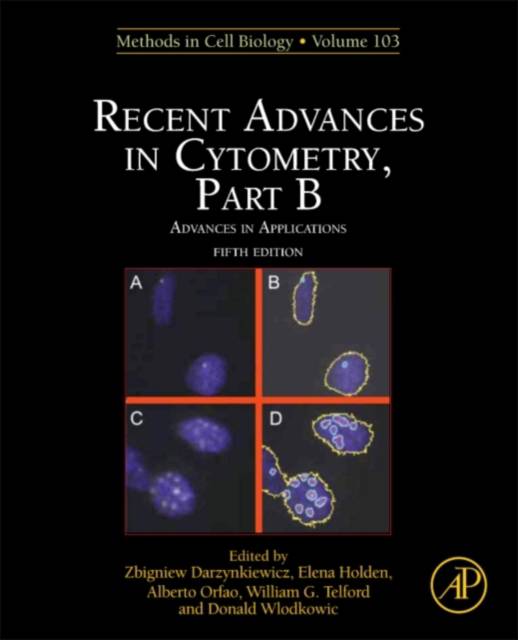
Recent Advances in Cytometry, Part B
Advances in Applications Volume 103
€ 191,45
+ 382 punten
Omschrijving
Cytometry is one of the most rapidly growing methodologies available for basic cell and molecular biology, cytogenetics, immunology, oncology, environmental sciences and also various fields of clinical medicine. This new edition, split into 2 Parts, is an almost completely new book, with nearly all of the chapters devoted to new topics. Like the previous volumes on cytometry published as part of the Methods in Cell Biology series, it provides a comprehensive description of particular cytometric methods and reviews their applications. Chapters present the theoretical foundations of the described methods, their applicability in experimental laboratory and clinical settings, and describes common traps and pitfalls such as problems with data interpretation, comparison with alternative assays, and choosing the optimal assay.
Specificaties
Betrokkenen
- Uitgeverij:
Inhoud
- Aantal bladzijden:
- 400
- Taal:
- Engels
- Reeks:
- Reeksnummer:
- nr. 103
Eigenschappen
- Productcode (EAN):
- 9780123854933
- Verschijningsdatum:
- 1/06/2011
- Uitvoering:
- Hardcover
- Formaat:
- Genaaid
- Afmetingen:
- 190 mm x 235 mm
- Gewicht:
- 919 g

Alleen bij Standaard Boekhandel
+ 382 punten op je klantenkaart van Standaard Boekhandel
SOLDEN


Beoordelingen
We publiceren alleen reviews die voldoen aan de voorwaarden voor reviews. Bekijk onze voorwaarden voor reviews.