


- Afhalen na 1 uur in een winkel met voorraad
- Gratis thuislevering in België vanaf € 30
- Ruim aanbod met 7 miljoen producten
- Afhalen na 1 uur in een winkel met voorraad
- Gratis thuislevering in België vanaf € 30
- Ruim aanbod met 7 miljoen producten





Omschrijving
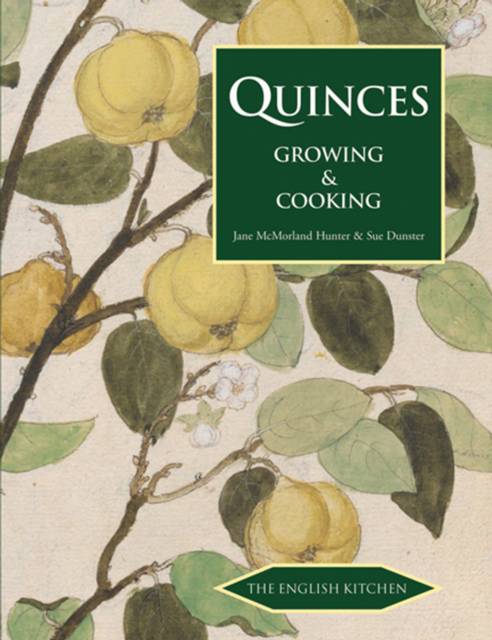
Quinces: Growing & Cooking is a book that every kitchen bookshelf should contain. Quinces have become an undeservedly forgotten fruit. This book reintroduces them to everyone, making them more accessible and providing an inviting range of recipes. The trees do not require much space, are easy to grow and would enhance any garden, whatever the size. The fruits are delicious and versatile and the recipes here extend well beyond jellies and jams, including sweets. From Goat's Cheese Tart to Quince Chocolates and Liqueurs, there is something for everyone. The quince has always had a special place among the fruits of Europe. The ancient Greeks called it the 'golden apple', the Romans the 'honey apple'. And it was most likely a quince, not an apple, that Eve plucked from the tree in the Garden of Eden. This book describes both the cultivation, the history and the cooking of quinces. Useful sections set out how to choose the variety best suited to your garden, to plant the trees and to maintain them in good health; there is a sketch of the glorious history of the fruit in cookery of past ages; there are some excellent recipes for savoury dishes that depend on the quince for that special flavour, and for all those sweet dishes that bring out the unique qualities of the fruit. The authors ensure that the reader can keep their harvest in the proper manner and they spend much time describing those special quince confections such as quince preserve and quince 'cheese' (or membrillo as it is known to the Spanish). We tend to forget that the first marmalades were made from quinces and that before we had easy access to citrus fruit, the quince was perhaps the most flavourful and aromatic product of the orchard known to our forebears. Quince trees, as Hunter and Dunster point out, won't fruit for a few years, so a three- or four-year old tree is the best to buy. Look for the right rootstock for your situation: Quince A will grow to around 15ft tall, whereas Quince C will stay measurably smaller (and is the one suitable for container-growing).
Specificaties
Betrokkenen
- Auteur(s):
- Uitgeverij:
Inhoud
- Aantal bladzijden:
- 128
- Taal:
- Engels
Eigenschappen
- Productcode (EAN):
- 9781909248410
- Verschijningsdatum:
- 10/10/2014
- Uitvoering:
- Paperback
- Formaat:
- Trade paperback (VS)
- Afmetingen:
- 137 mm x 185 mm
- Gewicht:
- 204 g


Alleen bij Standaard Boekhandel
+ 44 punten op je klantenkaart van Standaard Boekhandel
CADEAU


Beoordelingen
We publiceren alleen reviews die voldoen aan de voorwaarden voor reviews. Bekijk onze voorwaarden voor reviews.