



Bedankt voor het vertrouwen het afgelopen jaar! Om jou te bedanken bieden we GRATIS verzending (in België) aan op alles gedurende de hele maand januari.
- Afhalen na 1 uur in een winkel met voorraad
- In januari gratis thuislevering in België
- Ruim aanbod met 7 miljoen producten
Bedankt voor het vertrouwen het afgelopen jaar! Om jou te bedanken bieden we GRATIS verzending (in België) aan op alles gedurende de hele maand januari.
- Afhalen na 1 uur in een winkel met voorraad
- In januari gratis thuislevering in België
- Ruim aanbod met 7 miljoen producten





€ 176,45
+ 352 punten
Uitvoering
Omschrijving
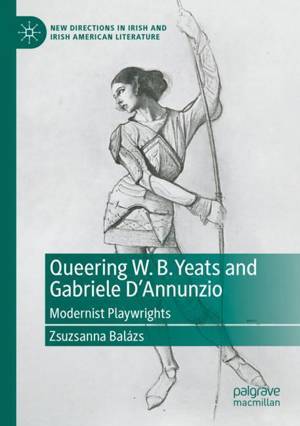
Queering W. B. Yeats and Gabriele D'Annunzio: Modernist Playwrights challenges the general resistance in scholarship and queer studies to approach Yeats and D'Annunzio through a queer lens because of their controversial affiliations with fascism and elitism, their heterosexuality and their venerated canonical status. This book provides the first fully theorised queer and comparative reading of Yeats's and D'Annunzio's drama. It offers the novel contention that due to their increasing involvement in queer and feminist subcultures, their plays feature feelings that are associated with queer historiography and generate ideas that began to be theorised by queer studies more than half a century after the composition of the plays. Moreover, it uncovers an alert, subversive and often coded social commentary in eight key dramatic texts by each playwright and at the same time highlights the thus far neglected commonalities between the plays and the queer historical as well as cultural contexts of these two prominent modernists.
Specificaties
Betrokkenen
- Auteur(s):
- Uitgeverij:
Inhoud
- Aantal bladzijden:
- 258
- Taal:
- Engels
- Reeks:
Eigenschappen
- Productcode (EAN):
- 9783031420702
- Verschijningsdatum:
- 11/12/2024
- Uitvoering:
- Paperback
- Afmetingen:
- 148 mm x 15 mm
- Gewicht:
- 359 g


Alleen bij Standaard Boekhandel
+ 352 punten op je klantenkaart van Standaard Boekhandel
SOLDEN


Beoordelingen
We publiceren alleen reviews die voldoen aan de voorwaarden voor reviews. Bekijk onze voorwaarden voor reviews.