



Bedankt voor het vertrouwen het afgelopen jaar! Om jou te bedanken bieden we GRATIS verzending (in België) aan op alles gedurende de hele maand januari.
- Afhalen na 1 uur in een winkel met voorraad
- In januari gratis thuislevering in België
- Ruim aanbod met 7 miljoen producten
Bedankt voor het vertrouwen het afgelopen jaar! Om jou te bedanken bieden we GRATIS verzending (in België) aan op alles gedurende de hele maand januari.
- Afhalen na 1 uur in een winkel met voorraad
- In januari gratis thuislevering in België
- Ruim aanbod met 7 miljoen producten





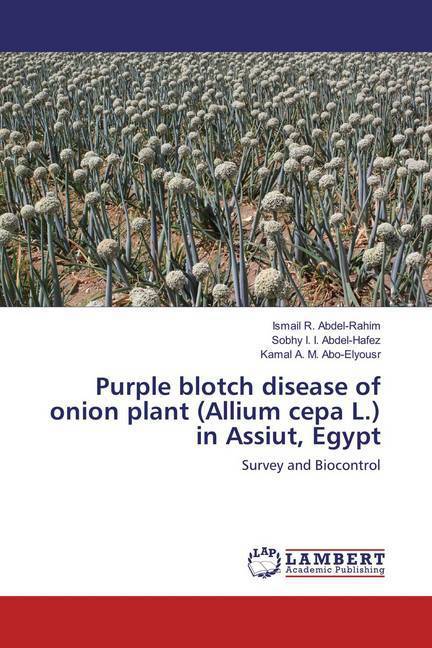
Purple blotch disease of onion plant (Allium cepa L.) in Assiut, Egypt
Survey and Biocontrol
Ismail R. Abdel-Rahim, Sobhy I. I. Abdel-Hafez, Kamal Abo-Elyousr
Paperback | Engels
€ 70,95
+ 141 punten
Omschrijving
Purple blotch disease is one of the most destructive diseases of Allium species in Egypt. The disease is more severe for seed crops in comparison to bulb crops, sometimes causing 100% loss of onion seed production. Despite chemical control of the disease was common practice, there are increments in the environmental pollution and development of fungicide-resistant strains. Therefore, there is a need for alternative control strategies for the disease. This study include answers to the following questions: 1.Is the onion purple blotch disease at Assiut Governorate a complex disease? 2.What is the difference between mycobiota associated with healthy and purple blotch diseased onion leaves? 3.What is the potentiality to use the recovered mycobiota as biocontrol agents against the purple blotch pathogens? 4.Although cyanobacteria are renewable sources for bioactive compounds, they have received little attentions as potential biocontrol agents of foliar plant diseases. Thus, this study ask "are the secondary metabolites of cyanobacteria have a fungicidal efficacy against the purple blotch pathogens?" 5.What is the possibility of applying the plant extracts for controlling the disease?
Specificaties
Betrokkenen
- Auteur(s):
- Uitgeverij:
Inhoud
- Aantal bladzijden:
- 192
- Taal:
- Engels
Eigenschappen
- Productcode (EAN):
- 9783659870071
- Uitvoering:
- Paperback
- Afmetingen:
- 150 mm x 220 mm


Alleen bij Standaard Boekhandel
+ 141 punten op je klantenkaart van Standaard Boekhandel
SOLDEN


Beoordelingen
We publiceren alleen reviews die voldoen aan de voorwaarden voor reviews. Bekijk onze voorwaarden voor reviews.