



Je cadeautjes zeker op tijd in huis hebben voor de feestdagen? Kom langs in onze winkels en vind het perfecte geschenk!
- Afhalen na 1 uur in een winkel met voorraad
- Gratis thuislevering in België vanaf € 30
- Ruim aanbod met 7 miljoen producten
Je cadeautjes zeker op tijd in huis hebben voor de feestdagen? Kom langs in onze winkels en vind het perfecte geschenk!
- Afhalen na 1 uur in een winkel met voorraad
- Gratis thuislevering in België vanaf € 30
- Ruim aanbod met 7 miljoen producten





€ 25,45
+ 50 punten
Uitvoering
Omschrijving
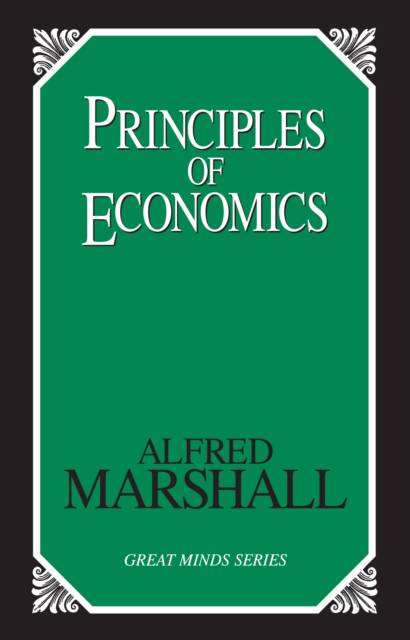
British economist Alfred Marshall (1842-1924) was one of the founders of the "neoclassical" school in which economists studied both wealth and human behavior to understand why we make the choices we do. First published in 1890, Principles of Economics stands as Marshall's most influential work. This abridged edition offers a general introduction to the study of economics, dealing mainly with normal conditions of industry, employment, and wages. It begins by isolating the primary relations of supply, demand, and price in regard to a particular commodity. Following his study of science, history, and philosophy, Marshall argues that, while fragmentary statistical hypotheses are used as temporary aids to dynamic economic concepts, the central idea of economics must be that of a living force and movement, and its main concern must be with human beings who are impelled, for better or worse, to change and progress.
Specificaties
Betrokkenen
- Auteur(s):
- Uitgeverij:
Inhoud
- Aantal bladzijden:
- 320
- Taal:
- Engels
- Reeks:
Eigenschappen
- Productcode (EAN):
- 9781573921404
- Verschijningsdatum:
- 1/05/1997
- Uitvoering:
- Paperback
- Formaat:
- Trade paperback (VS)
- Afmetingen:
- 140 mm x 215 mm
- Gewicht:
- 394 g


Alleen bij Standaard Boekhandel
+ 50 punten op je klantenkaart van Standaard Boekhandel
CADEAU


Beoordelingen
We publiceren alleen reviews die voldoen aan de voorwaarden voor reviews. Bekijk onze voorwaarden voor reviews.