



Bedankt voor het vertrouwen het afgelopen jaar! Om jou te bedanken bieden we GRATIS verzending (in België) aan op alles gedurende de hele maand januari.
- Afhalen na 1 uur in een winkel met voorraad
- In januari gratis thuislevering in België
- Ruim aanbod met 7 miljoen producten
Bedankt voor het vertrouwen het afgelopen jaar! Om jou te bedanken bieden we GRATIS verzending (in België) aan op alles gedurende de hele maand januari.
- Afhalen na 1 uur in een winkel met voorraad
- In januari gratis thuislevering in België
- Ruim aanbod met 7 miljoen producten





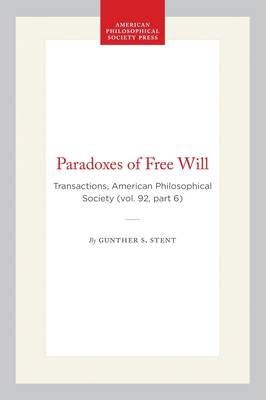
Paradoxes of Free Will
Transactions, American Philosophical Society (Vol. 92, Part 6)
Gunther S Stent
€ 78,45
+ 156 punten
Omschrijving
Driving human reason too far in the analysis of deep problems often leads to irresolvable inconsistencies and contradictions. In this 2002 J.F. Lewis Award-winning monograph, Gunther Stent traces the origins and development of the paradoxes of free will in this well-crafted introduction to philosophical debates regarding freedom of will. Free will poses one of the oldest and most vexatious philosophical problems, dating back to the beginnings of moral philosophy in ancient Greece. Pure theoretical reason implies that our actions are determined, while practical theoretical reason tells us that our will is free. Stent examines the arguments of moral responsibility versus determinism, from Socrates, Plato, and Aristotle to Immanuel Kant, Niels Bohr, and Max Planck.
Specificaties
Betrokkenen
- Auteur(s):
- Uitgeverij:
Inhoud
- Aantal bladzijden:
- 248
- Taal:
- Engels
- Reeks:
- Reeksnummer:
- nr. 83
Eigenschappen
- Productcode (EAN):
- 9780871699268
- Verschijningsdatum:
- 1/01/2002
- Uitvoering:
- Paperback
- Formaat:
- Trade paperback (VS)
- Afmetingen:
- 152 mm x 229 mm
- Gewicht:
- 399 g


Alleen bij Standaard Boekhandel
+ 156 punten op je klantenkaart van Standaard Boekhandel
SOLDEN


Beoordelingen
We publiceren alleen reviews die voldoen aan de voorwaarden voor reviews. Bekijk onze voorwaarden voor reviews.