



Bedankt voor het vertrouwen het afgelopen jaar! Om jou te bedanken bieden we GRATIS verzending (in België) aan op alles gedurende de hele maand januari.
- Afhalen na 1 uur in een winkel met voorraad
- Gratis thuislevering in België vanaf € 30
- Ruim aanbod met 7 miljoen producten
Bedankt voor het vertrouwen het afgelopen jaar! Om jou te bedanken bieden we GRATIS verzending (in België) aan op alles gedurende de hele maand januari.
- Afhalen na 1 uur in een winkel met voorraad
- Gratis thuislevering in België vanaf € 30
- Ruim aanbod met 7 miljoen producten





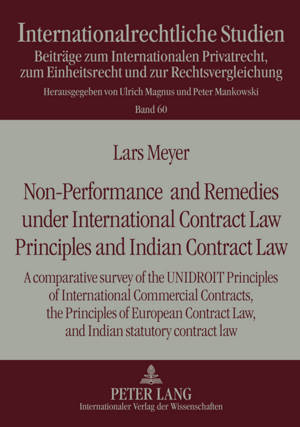
Non-Performance and Remedies Under International Contract Law Principles and Indian Contract Law
A Comparative Survey of the Unidroit Principles of International Commercial Contracts, the Principles of European Contract Law, and Indian Statutory Contract Law
Lars Meyer
€ 122,45
+ 244 punten
Omschrijving
The survey compares the rules on contractual non-performance and remedies under the UNIDROIT Principles of International Commercial Contracts, the Principles of European Contract Law, and Indian statutory contract law (including the Indian Contract Act, 1872). Given that most Indian statutes were derived from English law and may therefore be viewed as «codified common law», this comparison may contribute to the question of whether, especially in view of contract law harmonisation in the EU, the civil-law and common-law traditions could be merged in a common code. Moreover, it may help identify legal differences that are relevant to doing business between India and Europe. The general conclusion of the survey is that the Principles and Indian statutory contract law share a close proximity especially because many of their provisions on non-performance and remedies appear to be derived from the same concepts and also provide for very similar consequences.
Specificaties
Betrokkenen
- Auteur(s):
- Uitgeverij:
Inhoud
- Aantal bladzijden:
- 284
- Taal:
- Engels
- Reeks:
- Reeksnummer:
- nr. 60
Eigenschappen
- Productcode (EAN):
- 9783631609934
- Verschijningsdatum:
- 7/12/2010
- Uitvoering:
- Hardcover
- Formaat:
- Genaaid
- Afmetingen:
- 150 mm x 211 mm
- Gewicht:
- 498 g


Alleen bij Standaard Boekhandel
+ 244 punten op je klantenkaart van Standaard Boekhandel
CADEAU


Beoordelingen
We publiceren alleen reviews die voldoen aan de voorwaarden voor reviews. Bekijk onze voorwaarden voor reviews.