



Bedankt voor het vertrouwen het afgelopen jaar! Om jou te bedanken bieden we GRATIS verzending (in België) aan op alles gedurende de hele maand januari.
- Afhalen na 1 uur in een winkel met voorraad
- In januari gratis thuislevering in België
- Ruim aanbod met 7 miljoen producten
Bedankt voor het vertrouwen het afgelopen jaar! Om jou te bedanken bieden we GRATIS verzending (in België) aan op alles gedurende de hele maand januari.
- Afhalen na 1 uur in een winkel met voorraad
- In januari gratis thuislevering in België
- Ruim aanbod met 7 miljoen producten





€ 271,45
+ 542 punten
Uitvoering
Omschrijving
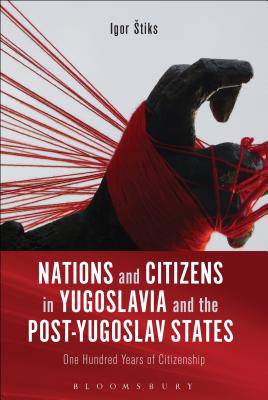
Between 1914 and the present day the political makeup of the Balkans has relentlessly changed, following unpredictable shifts of international and internal borders. Between and across these borders various political communities were formed, co-existed and (dis)integrated.
By analysing one hundred years of modern citizenship in Yugoslavia and post-Yugoslav states, Igor S tiks shows that the concept and practice of citizenship is necessary to understand how political communities are made, un-made and re-made. He argues that modern citizenship is a tool that can be used for different and opposing goals, from integration and re-unification to fragmentation and ethnic engineering.
The study of citizenship in the 'laboratory' of the Balkands offers not only an original angle to narrate an alternative political history, but also an insight into the fine mechanics and repeating glitches of modern politics, applicable to multinational states in the European Union and beyond.
By analysing one hundred years of modern citizenship in Yugoslavia and post-Yugoslav states, Igor S tiks shows that the concept and practice of citizenship is necessary to understand how political communities are made, un-made and re-made. He argues that modern citizenship is a tool that can be used for different and opposing goals, from integration and re-unification to fragmentation and ethnic engineering.
The study of citizenship in the 'laboratory' of the Balkands offers not only an original angle to narrate an alternative political history, but also an insight into the fine mechanics and repeating glitches of modern politics, applicable to multinational states in the European Union and beyond.
Specificaties
Betrokkenen
- Auteur(s):
- Uitgeverij:
Inhoud
- Aantal bladzijden:
- 240
- Taal:
- Engels
Eigenschappen
- Productcode (EAN):
- 9781474221528
- Verschijningsdatum:
- 30/07/2015
- Uitvoering:
- Hardcover
- Formaat:
- Genaaid
- Afmetingen:
- 156 mm x 234 mm
- Gewicht:
- 512 g


Alleen bij Standaard Boekhandel
+ 542 punten op je klantenkaart van Standaard Boekhandel
SOLDEN


Beoordelingen
We publiceren alleen reviews die voldoen aan de voorwaarden voor reviews. Bekijk onze voorwaarden voor reviews.