



Je cadeautjes zeker op tijd in huis hebben voor de feestdagen? Kom langs in onze winkels en vind het perfecte geschenk!
- Afhalen na 1 uur in een winkel met voorraad
- Gratis thuislevering in België vanaf € 30
- Ruim aanbod met 7 miljoen producten
Je cadeautjes zeker op tijd in huis hebben voor de feestdagen? Kom langs in onze winkels en vind het perfecte geschenk!
- Afhalen na 1 uur in een winkel met voorraad
- Gratis thuislevering in België vanaf € 30
- Ruim aanbod met 7 miljoen producten





€ 72,45
+ 144 punten
Omschrijving
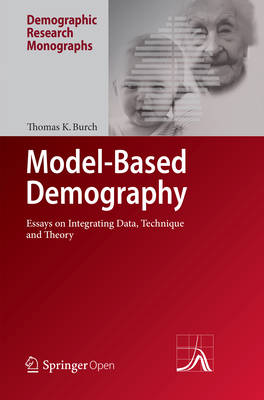
Late in a career of more than sixty years, Thomas Burch, an internationally known social demographer, undertook a wide-ranging methodological critique of demography. This open access volume contains a selection of resulting papers, some previously unpublished, some published but not readily accessible. Rejecting the idea that demography is simply a branch of applied statistics, his work views it as an autonomous and complete scientific discipline. When viewed from the perspective of modern philosophy of science, specifically the semantic or model-based school, demography is a balanced discipline, with a rich body of techniques and data, but also with more and better theories than generally recognized. As demonstrated in this book, some demographic techniques can also be seen as theoretical models, and some substantive/behavioral models, commonly rejected as theory because of inconsistent observations, are now seen as valuable theoretical models, for example demographic transition theory. This book shows how demography can build a strong theoretical edifice on its broad and deep empirical foundation by adoption of the model-based approach to science. But the full-fruits of this approach will require demographers to make greater use of computer modeling in the statement and manipulation of theoretical ideas, as well as for numerical computation.
Specificaties
Betrokkenen
- Auteur(s):
- Uitgeverij:
Inhoud
- Aantal bladzijden:
- 200
- Taal:
- Engels
- Reeks:
Eigenschappen
- Productcode (EAN):
- 9783319880273
- Verschijningsdatum:
- 25/08/2018
- Uitvoering:
- Paperback
- Afmetingen:
- 155 mm x 12 mm
- Gewicht:
- 343 g


Alleen bij Standaard Boekhandel
+ 144 punten op je klantenkaart van Standaard Boekhandel
CADEAU


Beoordelingen
We publiceren alleen reviews die voldoen aan de voorwaarden voor reviews. Bekijk onze voorwaarden voor reviews.