



Je cadeautjes zeker op tijd in huis hebben voor de feestdagen? Kom langs in onze winkels en vind het perfecte geschenk!
- Afhalen na 1 uur in een winkel met voorraad
- Gratis thuislevering in België vanaf € 30
- Ruim aanbod met 7 miljoen producten
Je cadeautjes zeker op tijd in huis hebben voor de feestdagen? Kom langs in onze winkels en vind het perfecte geschenk!
- Afhalen na 1 uur in een winkel met voorraad
- Gratis thuislevering in België vanaf € 30
- Ruim aanbod met 7 miljoen producten





€ 72,45
+ 144 punten
Omschrijving
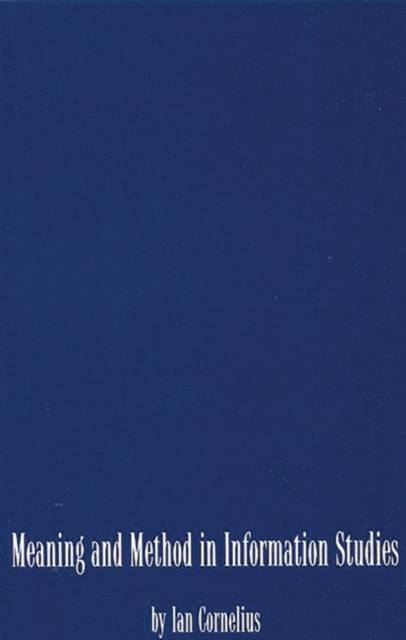
. . . frustrated philosophers everywhere-especially epistemologists-will enjoy this work. It is written by someone who appreciates the occasional nuances afforded by languages other than English. Moreover, it has a handy list of references, a serviceable back-of-the-book index, and an author index that is a veritable Who's Who of people who, like the author, have committed monography in their quest for a better understanding of our field. - Library and Information Science Research The focus of this volume is on the creation of meaning in the practice of library and information studies, and the need for an overall view and methodology of what the field is, how it develops, and how we identify our place within it when it is changing so rapidly. Succeeding versions of what the field is and what its practitioners do have left us unsure of where legitimacy lies- and how our own future can be reconciled to prevailing trends and impending changes. At the same time, there has been a movement to get away from positivist, or scientific, models of research practice. This book argues that those models should be rejected because they take no account of how human science's work or how people in service professions construct theory.
Specificaties
Betrokkenen
- Auteur(s):
- Uitgeverij:
Inhoud
- Aantal bladzijden:
- 1
- Taal:
- Engels
- Reeks:
Eigenschappen
- Productcode (EAN):
- 9781567502282
- Verschijningsdatum:
- 1/01/1996
- Uitvoering:
- Paperback
- Formaat:
- Trade paperback (VS)
- Afmetingen:
- 163 mm x 241 mm
- Gewicht:
- 485 g



Alleen bij Standaard Boekhandel
+ 144 punten op je klantenkaart van Standaard Boekhandel
CADEAU


Beoordelingen
We publiceren alleen reviews die voldoen aan de voorwaarden voor reviews. Bekijk onze voorwaarden voor reviews.