



Bedankt voor het vertrouwen het afgelopen jaar! Om jou te bedanken bieden we GRATIS verzending (in België) aan op alles gedurende de hele maand januari.
- Afhalen na 1 uur in een winkel met voorraad
- Gratis thuislevering in België vanaf € 30
- Ruim aanbod met 7 miljoen producten
Bedankt voor het vertrouwen het afgelopen jaar! Om jou te bedanken bieden we GRATIS verzending (in België) aan op alles gedurende de hele maand januari.
- Afhalen na 1 uur in een winkel met voorraad
- Gratis thuislevering in België vanaf € 30
- Ruim aanbod met 7 miljoen producten





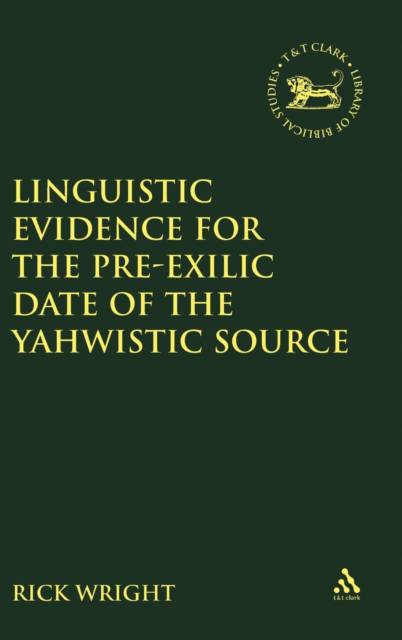
Linquistic Evidence for the Pre-Exilic Date of the Yahwistic Source
Richard M Wright
€ 373,45
+ 746 punten
Omschrijving
For the past few decades a growing number of scholars have attempted to overthrow the traditional Wellhausian view that the so-called 'Yahwist' or 'J' source of the Pentateuch is the oldest of the four major sources. These scholars have argued that J was composed during the exilic or post-exilic periods of ancient Israel. Their arguments have focused on the literary, historiographic, and theological characteristics of 'J'. This book attempts to re-evaluate on linguistic grounds such efforts to place the Yahwist source in the exilic or post-exilic periods. The study employs the methodology developed most prominently by Avi Hurvitz for identifying characteristic features of post-exilic Hebrew ('Late Biblical Hebrew'). This divides the language of the Hebrew Bible into three main chronological stages: Archaic Biblical Hebrew (ABH), Standard Biblical Hebrew (SBH), and Late Biblical Hebrew (LBH). Wright examines 40 features of J for which useful comparisons can be made to LBH and finds no evidence of LBH in the entire Yahwist source. Therefore it is unlikely that J was composed during the post-exilic period. Moreover since Hurvitz has shown that the exilic period was a time of transition between SBH and LBH such that late features began to occur in exilic texts, the author concludes on linguistic grounds that J was most likely composed during the pre-exilic period of ancient Israel.
Specificaties
Betrokkenen
- Auteur(s):
- Uitgeverij:
Inhoud
- Aantal bladzijden:
- 220
- Taal:
- Engels
- Reeks:
- Reeksnummer:
- nr. 419
Eigenschappen
- Productcode (EAN):
- 9780567041210
- Verschijningsdatum:
- 30/06/2005
- Uitvoering:
- Hardcover
- Formaat:
- Genaaid
- Afmetingen:
- 156 mm x 244 mm
- Gewicht:
- 476 g


Alleen bij Standaard Boekhandel
+ 746 punten op je klantenkaart van Standaard Boekhandel
CADEAU


Beoordelingen
We publiceren alleen reviews die voldoen aan de voorwaarden voor reviews. Bekijk onze voorwaarden voor reviews.