



Je cadeautjes zeker op tijd in huis hebben voor de feestdagen? Kom langs in onze winkels en vind het perfecte geschenk!
- Afhalen na 1 uur in een winkel met voorraad
- Gratis thuislevering in België vanaf € 30
- Ruim aanbod met 7 miljoen producten
Je cadeautjes zeker op tijd in huis hebben voor de feestdagen? Kom langs in onze winkels en vind het perfecte geschenk!
- Afhalen na 1 uur in een winkel met voorraad
- Gratis thuislevering in België vanaf € 30
- Ruim aanbod met 7 miljoen producten





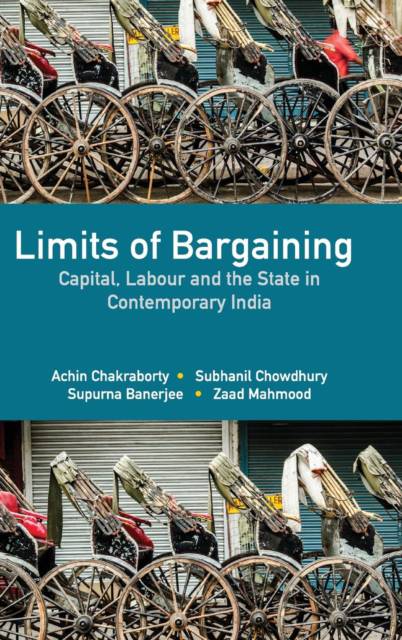
Limits of Bargaining
Capital, Labour and the State in Contemporary India
Achin Chakraborty, Subhanil Chowdhury, Supurna Banerjee
Hardcover | Engels
€ 152,95
+ 305 punten
Omschrijving
Limits of Bargaining is an original addition to the political economy analysis of capital-labour relations in the organised industrial sector in the context of economic liberalisation in India. It analyses the dynamics of the capital-labour bargaining process in the context of the changing nature of the state and market as a result of adoption of policies of liberalisation and globalisation for the last two and half decades. It examines the nature of collective bargaining and analyses the underlying structural-political conditions that shape the capital-labour relations. Based on original empirical material from West Bengal, a state long considered pro-labour, the book presents bargaining between capital and labour as endogenous to the interplay of the triad of the market, technology and the institutions of the state. It illustrates everyday interactions between labour and management, different unions and outside actors that shape collective bargaining, and highlights the negotiation, appropriations and compromises that shape bargaining at the operational level.
Specificaties
Betrokkenen
- Auteur(s):
- Uitgeverij:
Inhoud
- Aantal bladzijden:
- 170
- Taal:
- Engels
Eigenschappen
- Productcode (EAN):
- 9781108492249
- Verschijningsdatum:
- 23/05/2019
- Uitvoering:
- Hardcover
- Formaat:
- Genaaid
- Afmetingen:
- 152 mm x 229 mm
- Gewicht:
- 381 g


Alleen bij Standaard Boekhandel
+ 305 punten op je klantenkaart van Standaard Boekhandel
CADEAU


Beoordelingen
We publiceren alleen reviews die voldoen aan de voorwaarden voor reviews. Bekijk onze voorwaarden voor reviews.