



Je cadeautjes zeker op tijd in huis hebben voor de feestdagen? Kom langs in onze winkels en vind het perfecte geschenk!
- Afhalen na 1 uur in een winkel met voorraad
- Gratis thuislevering in België vanaf € 30
- Ruim aanbod met 7 miljoen producten
Je cadeautjes zeker op tijd in huis hebben voor de feestdagen? Kom langs in onze winkels en vind het perfecte geschenk!
- Afhalen na 1 uur in een winkel met voorraad
- Gratis thuislevering in België vanaf € 30
- Ruim aanbod met 7 miljoen producten





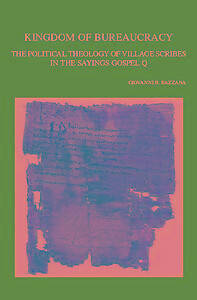
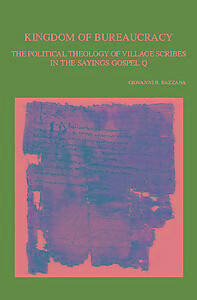
Kingdom of Bureaucracy
The Political Theology of Village Scribes in the Sayings Gospel Q
G B Bazzana
€ 172,45
+ 344 punten
Omschrijving
The Sayings Gospel Q was composed in the central decades of the first century CE by Galilean villagers who had acquired knowledge of Greek mostly through their involvement with the public administration. The present book analyzes the text of Q in order to rediscover the terminological and ideological traces of the activity of these sub-elite scribes in the Sayings Gospel. Given the bureaucratic positions occupied by the members of this group, the peculiar use of the phrase Basileia tou theou carries a specific significance for its theological political implications. On the basis of Giorgio Agamben's recent revision of the category of political theology, the attitude of Q on divine kingship is understood as an instance of sub-elite negotiation of social and political positions vis-a-vis the expansion of Roman imperial hegemony in the eastern Mediterranean. In this context the author(s) of Q envisage apocalyptic scenarios in which divine kingship replaces human rulers and native sub-elite bureaucrats can share in the exercise of cosmic government.
Specificaties
Betrokkenen
- Auteur(s):
- Uitgeverij:
Inhoud
- Aantal bladzijden:
- 395
- Taal:
- Engels
- Reeks:
- Reeksnummer:
- nr. 274
Eigenschappen
- Productcode (EAN):
- 9789042931787
- Verschijningsdatum:
- 2/04/2015
- Uitvoering:
- Paperback
- Formaat:
- Trade paperback (VS)
- Afmetingen:
- 157 mm x 241 mm
- Gewicht:
- 657 g


Alleen bij Standaard Boekhandel
+ 344 punten op je klantenkaart van Standaard Boekhandel
CADEAU


Beoordelingen
We publiceren alleen reviews die voldoen aan de voorwaarden voor reviews. Bekijk onze voorwaarden voor reviews.