



Bedankt voor het vertrouwen het afgelopen jaar! Om jou te bedanken bieden we GRATIS verzending (in België) aan op alles gedurende de hele maand januari.
- Afhalen na 1 uur in een winkel met voorraad
- In januari gratis thuislevering in België
- Ruim aanbod met 7 miljoen producten
Bedankt voor het vertrouwen het afgelopen jaar! Om jou te bedanken bieden we GRATIS verzending (in België) aan op alles gedurende de hele maand januari.
- Afhalen na 1 uur in een winkel met voorraad
- In januari gratis thuislevering in België
- Ruim aanbod met 7 miljoen producten





Omschrijving
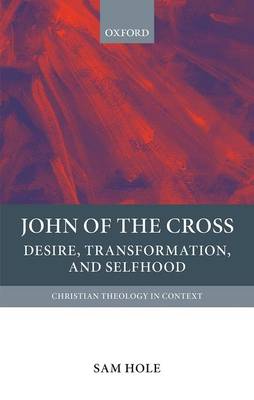
Through the 'dark night of the soul' to the depiction of the erotically-charged union of the soul and God, the poetry and prose works of the Spanish friar John of the Cross (1542-1591) offer a striking account of the transformation of the individual in the course of the Christian life. John of the Cross: Desire, Transformation, and Selfhood argues that these writings are animated by John's own creative and subtly conceptualized notion of erotic desire. John's understanding of desire has the potential to enrich recent theological discussion of the subject, but it has been curiously neglected in past scholarship. To correct this lacuna, this study undertakes a detailed historical analysis in three parts. Firstly, it attends to the patristic, medieval, and sixteenth-century Spanish influences on John's writings, showing how John reworks a long tradition of biblical, Christian, and Platonic reflection on the concept. Secondly, it traces the importance of desire through John's writings, demonstrating how he develops the theme through his poetry, his anthropology of the soul, and his account of the spiritual ascent. Thirdly, it explores the reception of his writings in the twentieth century, demonstrating how particular modern philosophical and theological commitments have prevented scholars from recognising the rich and distinctive shape of John's theological vision. John's account of the transformation of the self, with its hopeful vision of the graced transformation of the soul's desires, has significance beyond the constrained modern categories of systematic theology, Christian spirituality, pastoral theology, and mysticism--it is a vision that is worthy of recovery today.
Specificaties
Betrokkenen
- Auteur(s):
- Uitgeverij:
Inhoud
- Aantal bladzijden:
- 234
- Taal:
- Engels
- Reeks:
Eigenschappen
- Productcode (EAN):
- 9780198863069
- Verschijningsdatum:
- 19/01/2021
- Uitvoering:
- Hardcover
- Formaat:
- Genaaid
- Afmetingen:
- 137 mm x 218 mm
- Gewicht:
- 476 g


Alleen bij Standaard Boekhandel
+ 370 punten op je klantenkaart van Standaard Boekhandel
SOLDEN


Beoordelingen
We publiceren alleen reviews die voldoen aan de voorwaarden voor reviews. Bekijk onze voorwaarden voor reviews.