



Bedankt voor het vertrouwen het afgelopen jaar! Om jou te bedanken bieden we GRATIS verzending (in België) aan op alles gedurende de hele maand januari.
- Afhalen na 1 uur in een winkel met voorraad
- Gratis thuislevering in België vanaf € 30
- Ruim aanbod met 7 miljoen producten
Bedankt voor het vertrouwen het afgelopen jaar! Om jou te bedanken bieden we GRATIS verzending (in België) aan op alles gedurende de hele maand januari.
- Afhalen na 1 uur in een winkel met voorraad
- Gratis thuislevering in België vanaf € 30
- Ruim aanbod met 7 miljoen producten





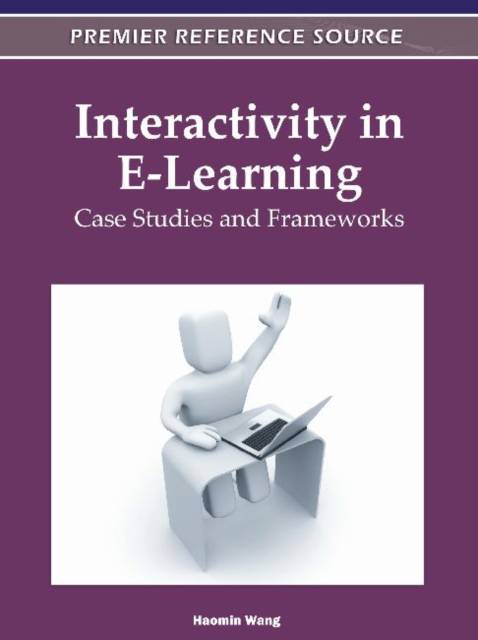
Interactivity in E-Learning
Case Studies and Frameworks
€ 222,45
+ 444 punten
Omschrijving
In the past, interactivity has often been studied from the perspective of a particular subject area. Much effort has been expended on classifying and topologizing interactivity from the perspectives of media studies and information science. However, there is a lack of consolidated effort to relate these studies and to connect theoretical and empirical research with the practice of e-learning. Interactivity in E-Learning: Case Studies and Frameworks provides a comprehensive examination of interactivity, combining key perspectives from communication and media studies, distributed cognition, system affordances, user control, and social interaction. This new approach offers a holistic view of interactivity, which is useful for researchers working in the fields of communication and media, educational media, e-learning, and instructional technology.
Specificaties
Betrokkenen
- Uitgeverij:
Inhoud
- Aantal bladzijden:
- 410
- Taal:
- Engels
- Reeks:
Eigenschappen
- Productcode (EAN):
- 9781613504413
- Verschijningsdatum:
- 31/12/2011
- Uitvoering:
- Hardcover
- Formaat:
- Genaaid
- Afmetingen:
- 239 mm x 302 mm
- Gewicht:
- 2653 g


Alleen bij Standaard Boekhandel
+ 444 punten op je klantenkaart van Standaard Boekhandel
CADEAU


Beoordelingen
We publiceren alleen reviews die voldoen aan de voorwaarden voor reviews. Bekijk onze voorwaarden voor reviews.