



Je cadeautjes zeker op tijd in huis hebben voor de feestdagen? Kom langs in onze winkels en vind het perfecte geschenk!
- Afhalen na 1 uur in een winkel met voorraad
- Gratis thuislevering in België vanaf € 30
- Ruim aanbod met 7 miljoen producten
Je cadeautjes zeker op tijd in huis hebben voor de feestdagen? Kom langs in onze winkels en vind het perfecte geschenk!
- Afhalen na 1 uur in een winkel met voorraad
- Gratis thuislevering in België vanaf € 30
- Ruim aanbod met 7 miljoen producten





€ 67,95
+ 135 punten
Omschrijving
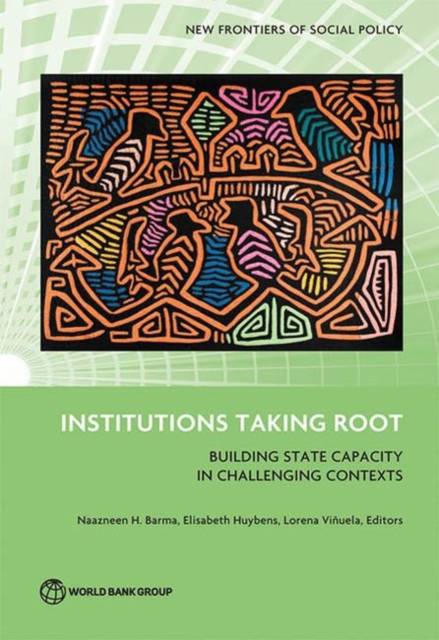
Building and operating successful public institutions is a perennial and long-term challenge for governments, which is compounded by the volatile conditions found in fragile settings. Yet some government agencies do manage to take root and achieve success in delivering results earning legitimacy and forging resilience in otherwise challenging contexts. Drawing on mixed-method empirical research carried out on nine public agencies in Lao PDR, Sierra Leone, The Gambia, and Timor Leste, this volume identifies the shared causal mechanisms underpinning institutional success in fragile states by examining the inner workings of these institutions, along with the external operational environment and sociopolitical context in which they exist. Successful institutions share and deploy a common repertoire of internal and external operational strategies. In addition they connect this micro-institutional repertoire to the macro-sociopolitical context along three discernible pathways to institutional success. Institutional development is a heavily contextual, dynamic, and non-linear process but certain actionable lessons emerge for policy-makiers and development partners.
Specificaties
Betrokkenen
- Auteur(s):
- Uitgeverij:
Inhoud
- Aantal bladzijden:
- 412
- Taal:
- Engels
- Reeks:
Eigenschappen
- Productcode (EAN):
- 9781464802690
- Verschijningsdatum:
- 9/09/2014
- Uitvoering:
- Paperback
- Formaat:
- Trade paperback (VS)
- Afmetingen:
- 150 mm x 226 mm
- Gewicht:
- 635 g


Alleen bij Standaard Boekhandel
+ 135 punten op je klantenkaart van Standaard Boekhandel
CADEAU


Beoordelingen
We publiceren alleen reviews die voldoen aan de voorwaarden voor reviews. Bekijk onze voorwaarden voor reviews.