



Bedankt voor het vertrouwen het afgelopen jaar! Om jou te bedanken bieden we GRATIS verzending (in België) aan op alles gedurende de hele maand januari.
- Afhalen na 1 uur in een winkel met voorraad
- Gratis thuislevering in België vanaf € 30
- Ruim aanbod met 7 miljoen producten
Bedankt voor het vertrouwen het afgelopen jaar! Om jou te bedanken bieden we GRATIS verzending (in België) aan op alles gedurende de hele maand januari.
- Afhalen na 1 uur in een winkel met voorraad
- Gratis thuislevering in België vanaf € 30
- Ruim aanbod met 7 miljoen producten





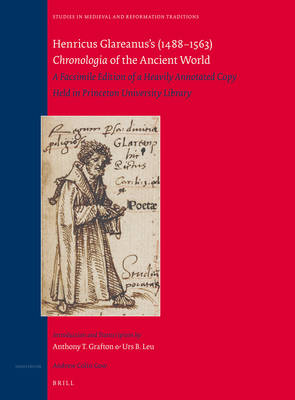
Henricus Glareanus's (1488-1563) Chronologia of the Ancient World
A Facsimile Edition of a Heavily Annotated Copy Held in Princeton University Library
Anthony Grafton, Urs Leu
€ 88,98
+ 177 punten
Omschrijving
The humanists of the fifteenth and sixteenth centuries took a passionate interest in Livy's History of Rome. No one studied the text more intensively than the Swiss scholar Henricus Glareanus, who not only held lectures on different Roman historians at the University of Freiburg im Breisgau, but also drew up chronological tables for ancient history, which were printed several times in Basle, sometimes together with Livy's History. Glareanus annotated his personal copy of the chronological tables and invited his students to copy his marginal notes into their own copies of the book. Three of these copies survived, and give new insight into Glareanus's practices as a scholar and teacher. The notes they contain--and the way in which Glareanus used them as a teacher--are distinctive, and neither has had much attention in the past from historians of reading. This volume presents facsimile reproductions of the tables from one of the surviving copies, now kept in Princeton University Library. The high-quality reproductions include transcriptions of the handwritten notes, unlocking Glareanus's teachings for a new generation of students and researchers.
Specificaties
Betrokkenen
- Auteur(s):
- Uitgeverij:
Inhoud
- Aantal bladzijden:
- 178
- Taal:
- Engels
- Reeks:
- Reeksnummer:
- nr. 177
Eigenschappen
- Productcode (EAN):
- 9789004261754
- Verschijningsdatum:
- 15/11/2013
- Uitvoering:
- Hardcover
- Formaat:
- Genaaid
- Afmetingen:
- 213 mm x 295 mm
- Gewicht:
- 771 g


Alleen bij Standaard Boekhandel
+ 177 punten op je klantenkaart van Standaard Boekhandel
CADEAU


Beoordelingen
We publiceren alleen reviews die voldoen aan de voorwaarden voor reviews. Bekijk onze voorwaarden voor reviews.