



Bedankt voor het vertrouwen het afgelopen jaar! Om jou te bedanken bieden we GRATIS verzending (in België) aan op alles gedurende de hele maand januari.
- Afhalen na 1 uur in een winkel met voorraad
- Gratis thuislevering in België vanaf € 30
- Ruim aanbod met 7 miljoen producten
Bedankt voor het vertrouwen het afgelopen jaar! Om jou te bedanken bieden we GRATIS verzending (in België) aan op alles gedurende de hele maand januari.
- Afhalen na 1 uur in een winkel met voorraad
- Gratis thuislevering in België vanaf € 30
- Ruim aanbod met 7 miljoen producten





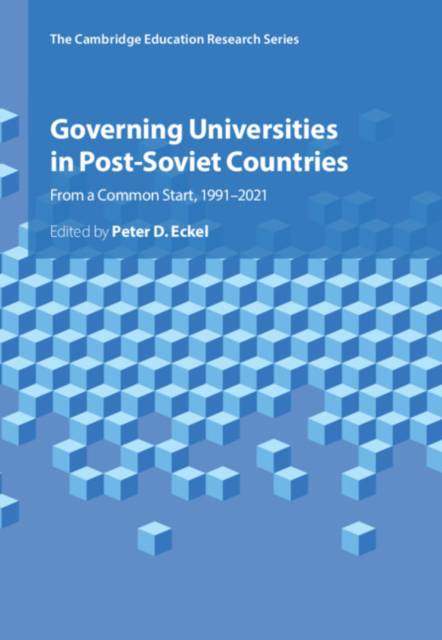
Governing Universities in Post-Soviet Countries
From a Common Start, 1991–2021
€ 180,45
+ 360 punten
Omschrijving
University governance is an essential but complex phenomenon, even in countries where institutional-level governance has a long and strong tradition. After the dissolution of the USSR, each of the 15 former Soviet countries developed their own university governance system and this groundbreaking book explores how these countries evolved from the 'common start' of a unified and tightly controlled higher education system, to shaping their own paths in higher education. Each chapter explores a different country, allowing university governance models to be compared and contrasted. The countries provide examples of a variety of different governance models - state-extended, academic focused, internal/external and civic - and the book highlights the advantages and disadvantages of each relative to their context. It also presents innovative frameworks to understand governance effectiveness in terms of autonomy, competition, and capacity. It is essential reading for researchers, students, and policy makers. This title is also available as open access on Cambridge Core.
Specificaties
Betrokkenen
- Uitgeverij:
Inhoud
- Aantal bladzijden:
- 306
- Taal:
- Engels
- Reeks:
Eigenschappen
- Productcode (EAN):
- 9781009098731
- Verschijningsdatum:
- 19/10/2023
- Uitvoering:
- Hardcover
- Formaat:
- Genaaid
- Afmetingen:
- 170 mm x 244 mm
- Gewicht:
- 684 g


Alleen bij Standaard Boekhandel
+ 360 punten op je klantenkaart van Standaard Boekhandel
CADEAU


Beoordelingen
We publiceren alleen reviews die voldoen aan de voorwaarden voor reviews. Bekijk onze voorwaarden voor reviews.