



Bedankt voor het vertrouwen het afgelopen jaar! Om jou te bedanken bieden we GRATIS verzending (in België) aan op alles gedurende de hele maand januari.
- Afhalen na 1 uur in een winkel met voorraad
- In januari gratis thuislevering in België
- Ruim aanbod met 7 miljoen producten
Bedankt voor het vertrouwen het afgelopen jaar! Om jou te bedanken bieden we GRATIS verzending (in België) aan op alles gedurende de hele maand januari.
- Afhalen na 1 uur in een winkel met voorraad
- In januari gratis thuislevering in België
- Ruim aanbod met 7 miljoen producten





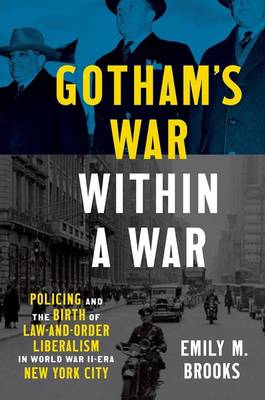
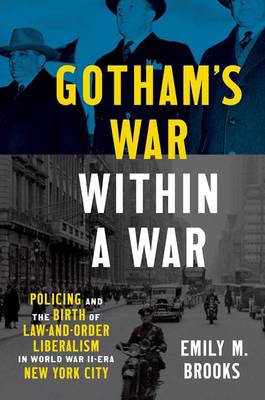
Gotham's War Within a War
Policing and the Birth of Law-And-Order Liberalism in World War II-Era New York City
Emily Brooks
€ 45,95
+ 91 punten
Uitvoering
Omschrijving
A surprising history unfolded in New Deal- and World War II-era New York City under Mayor Fiorello La Guardia. Throughout the late nineteenth and early twentieth centuries, members of the NYPD had worked to enforce partisan political power rather than focus on crime. That changed when La Guardia took office in 1934 and shifted the city's priorities toward liberal reform. La Guardia's approach to low-level policing anticipated later trends in law enforcement, including "broken windows" theory and "stop and frisk" policy. Police officers worked to preserve urban order by controlling vice, including juvenile delinquency, prostitution, gambling, and the "disorderly" establishments that officials believed housed these activities.
This mode of policing was central to La Guardia's influential vision of urban governance, but it was met with resistance from the Black New Yorkers, youth, and working-class women it primarily targeted. The mobilization for World War II introduced new opportunities for the NYPD to intensify policing and criminalize these groups with federal support. In the 1930s these communities were framed as perils to urban order; during the militarized war years, they became a supposed threat to national security itself. Emily M. Brooks recasts the evolution of urban policing by revealing that the rise of law-and-order liberalism was inseparable from the surveillance, militarism, and nationalism of war.
This mode of policing was central to La Guardia's influential vision of urban governance, but it was met with resistance from the Black New Yorkers, youth, and working-class women it primarily targeted. The mobilization for World War II introduced new opportunities for the NYPD to intensify policing and criminalize these groups with federal support. In the 1930s these communities were framed as perils to urban order; during the militarized war years, they became a supposed threat to national security itself. Emily M. Brooks recasts the evolution of urban policing by revealing that the rise of law-and-order liberalism was inseparable from the surveillance, militarism, and nationalism of war.
Specificaties
Betrokkenen
- Auteur(s):
- Uitgeverij:
Inhoud
- Aantal bladzijden:
- 258
- Taal:
- Engels
- Reeks:
Eigenschappen
- Productcode (EAN):
- 9781469676593
- Verschijningsdatum:
- 31/10/2023
- Uitvoering:
- Paperback
- Formaat:
- Trade paperback (VS)
- Afmetingen:
- 156 mm x 234 mm
- Gewicht:
- 403 g


Alleen bij Standaard Boekhandel
+ 91 punten op je klantenkaart van Standaard Boekhandel
SOLDEN


Beoordelingen
We publiceren alleen reviews die voldoen aan de voorwaarden voor reviews. Bekijk onze voorwaarden voor reviews.