



Je cadeautjes zeker op tijd in huis hebben voor de feestdagen? Kom langs in onze winkels en vind het perfecte geschenk!
- Afhalen na 1 uur in een winkel met voorraad
- Gratis thuislevering in België vanaf € 30
- Ruim aanbod met 7 miljoen producten
Je cadeautjes zeker op tijd in huis hebben voor de feestdagen? Kom langs in onze winkels en vind het perfecte geschenk!
- Afhalen na 1 uur in een winkel met voorraad
- Gratis thuislevering in België vanaf € 30
- Ruim aanbod met 7 miljoen producten





€ 25,45
+ 50 punten
Uitvoering
Omschrijving
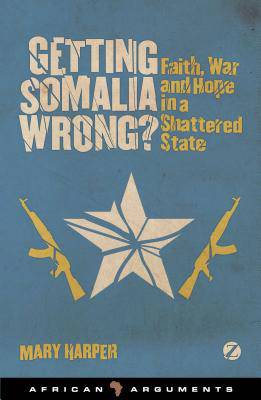
Somalia is a failed state, representing a threat to itself, its neighbours and the wider world. In recent years, it has become notorious for the piracy off its coast and the rise of Islamic extremism, opening it up as a new 'southern front' in the war on terror. At least that is how it is inevitably portrayed by politicians and in the media.
Mary Harper presents the first comprehensive account of the chaos into which the country has descended and the United States' renewed involvement there. In doing so, Harper argues that viewing Somalia through the prism of al-Qaeda risks further destabilizing the country and the entire Horn of Africa, while also showing that though the country may be a failed state, it is far from being a failed society. In reality, alternative forms of business, justice, education and local politics have survived and even flourished.
Provocative in its analysis, Harper shows that until the international community starts to 'get it right' the consequences will be devastating, not just for Somalia, but for the world.
Mary Harper presents the first comprehensive account of the chaos into which the country has descended and the United States' renewed involvement there. In doing so, Harper argues that viewing Somalia through the prism of al-Qaeda risks further destabilizing the country and the entire Horn of Africa, while also showing that though the country may be a failed state, it is far from being a failed society. In reality, alternative forms of business, justice, education and local politics have survived and even flourished.
Provocative in its analysis, Harper shows that until the international community starts to 'get it right' the consequences will be devastating, not just for Somalia, but for the world.
Specificaties
Betrokkenen
- Auteur(s):
- Uitgeverij:
Inhoud
- Aantal bladzijden:
- 232
- Taal:
- Engels
- Reeks:
Eigenschappen
- Productcode (EAN):
- 9781842779330
- Verschijningsdatum:
- 9/02/2012
- Uitvoering:
- Paperback
- Formaat:
- Trade paperback (VS)
- Afmetingen:
- 137 mm x 211 mm
- Gewicht:
- 249 g


Alleen bij Standaard Boekhandel
+ 50 punten op je klantenkaart van Standaard Boekhandel
CADEAU


Beoordelingen
We publiceren alleen reviews die voldoen aan de voorwaarden voor reviews. Bekijk onze voorwaarden voor reviews.