



Je cadeautjes zeker op tijd in huis hebben voor de feestdagen? Kom langs in onze winkels en vind het perfecte geschenk!
- Afhalen na 1 uur in een winkel met voorraad
- Gratis thuislevering in België vanaf € 30
- Ruim aanbod met 7 miljoen producten
Je cadeautjes zeker op tijd in huis hebben voor de feestdagen? Kom langs in onze winkels en vind het perfecte geschenk!
- Afhalen na 1 uur in een winkel met voorraad
- Gratis thuislevering in België vanaf € 30
- Ruim aanbod met 7 miljoen producten





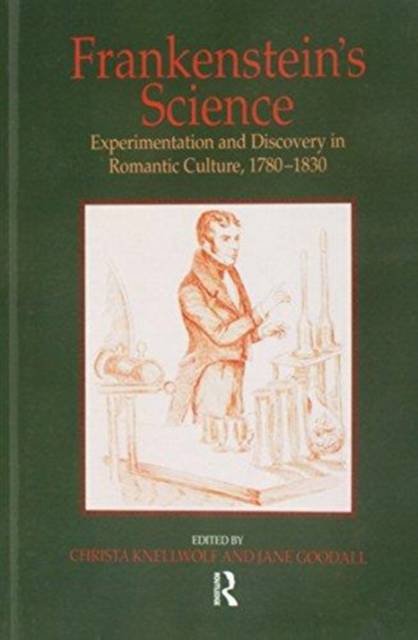
Frankenstein's Science
Experimentation and Discovery in Romantic Culture, 1780-1830
Jane Goodall
Paperback | Engels
€ 114,45
+ 228 punten
Uitvoering
Omschrijving
Though Mary Shelley's Frankenstein has inspired a vast body of criticism, there are no book-length studies that contextualise this widely taught novel in contemporary scientific and literary debates. The essays in this volume by leading writers in their fields provide new historical scholarship into areas of science and pseudo-science that generated fierce controversy in Mary Shelley's time: anatomy, electricity, medicine, teratology, Mesmerism, quackery and proto-evolutionary biology. The collection embraces a multifaceted view of the exciting cultural climate in Britain and Europe from 1780 to 1830. While Frankenstein is all too often read as a cautionary tale of the inherent dangers of uncontrolled scientific experimentation, the essays here take the reader back to a period when experimenters and radical thinkers viewed science as the harbinger of social innovation that would counter the virulent conservative backlash following the French Revolution. The collection will be an invaluable resource for students and scholars specialising in Romanticism, cultural history, philosophy and the history of science.
Specificaties
Betrokkenen
- Auteur(s):
- Uitgeverij:
Inhoud
- Aantal bladzijden:
- 240
- Taal:
- Engels
Eigenschappen
- Productcode (EAN):
- 9781138257993
- Verschijningsdatum:
- 28/11/2016
- Uitvoering:
- Paperback
- Formaat:
- Trade paperback (VS)
- Afmetingen:
- 156 mm x 234 mm
- Gewicht:
- 340 g


Alleen bij Standaard Boekhandel
+ 228 punten op je klantenkaart van Standaard Boekhandel
CADEAU


Beoordelingen
We publiceren alleen reviews die voldoen aan de voorwaarden voor reviews. Bekijk onze voorwaarden voor reviews.